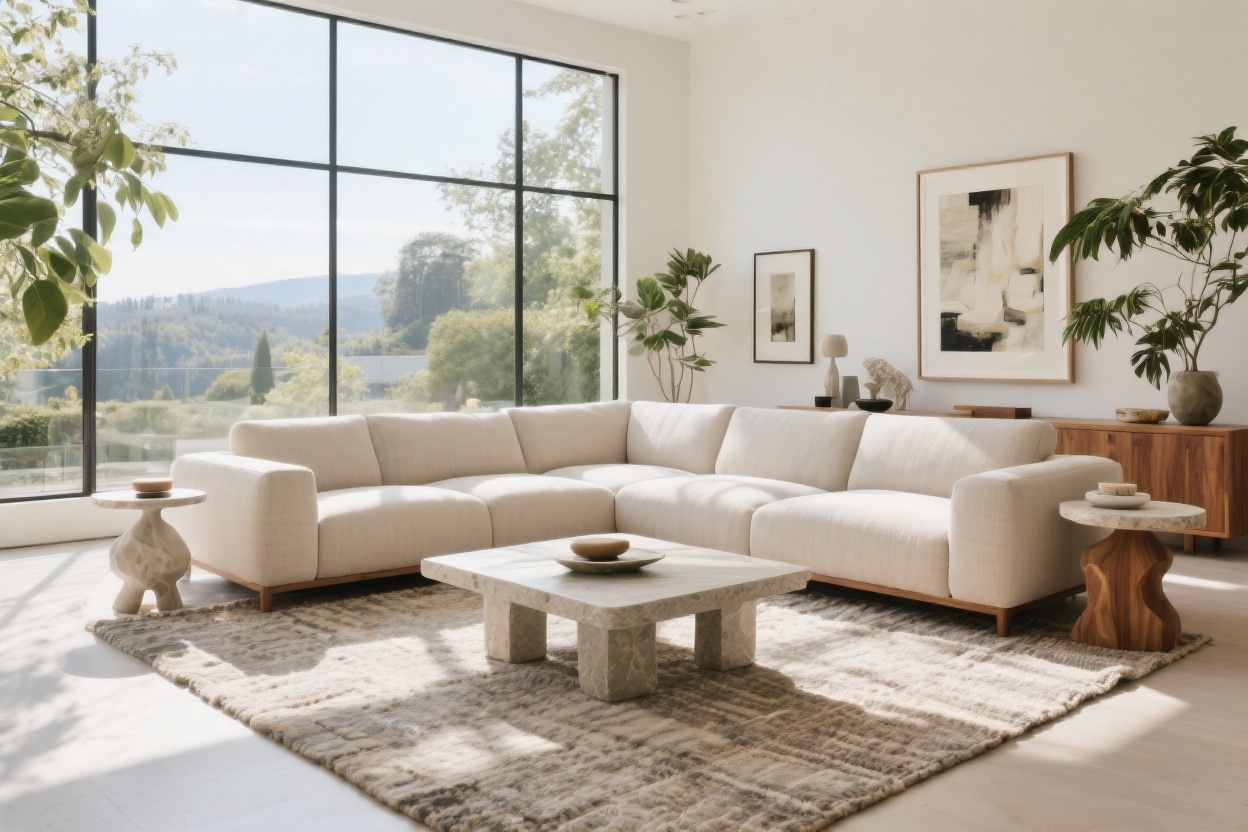
You know that tiny, polite sofa you’ve been babying? It’s holding your living room back. A big, unapologetic sofa makes everything look more intentional, more luxe, and way more comfortable. If you’re on the fence, these seven ideas will convince you to go big or go back to standing.
1. The Anchor Effect: Big Sofa, Balanced Room
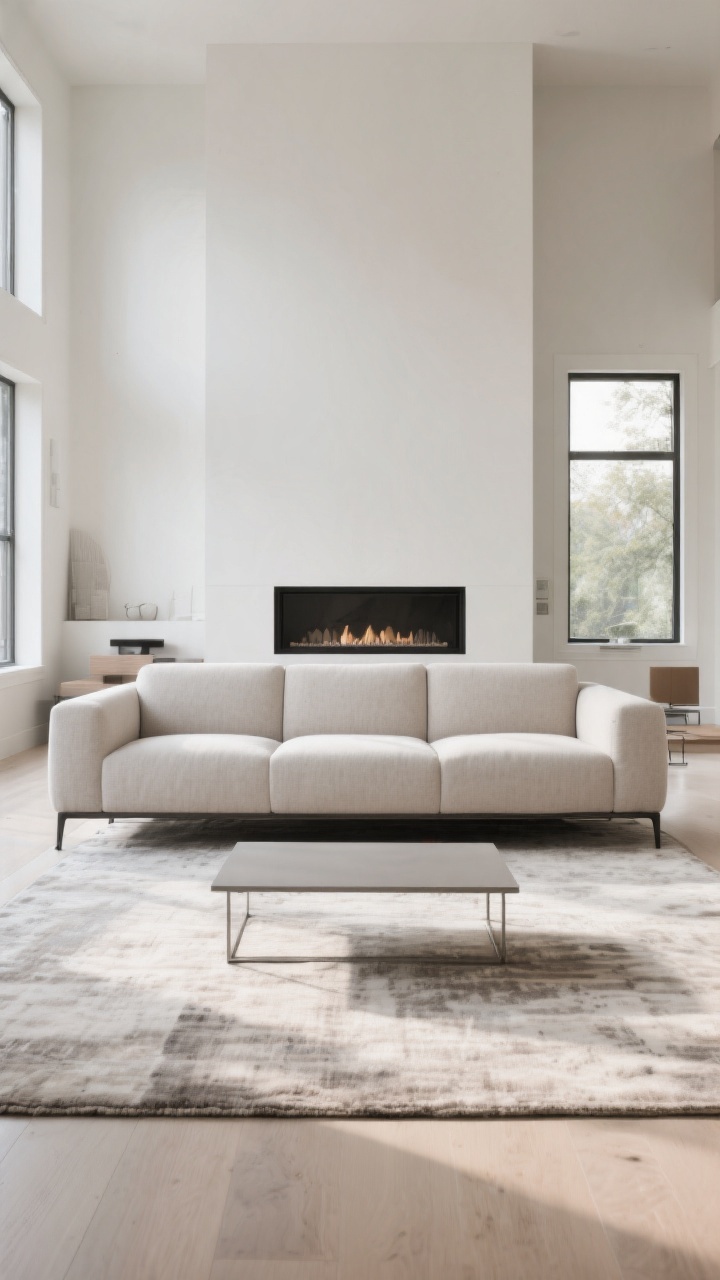
A large sofa doesn’t overwhelm a space—it anchors it. When you choose a generous sectional or a deep three-seater, it instantly gives your layout purpose and pulls the whole room together like a well-placed exclamation point.
Think of it this way: your sofa becomes the visual north star. Everything else can orbit around it without feeling chaotic.
How to Nail the Anchor Look
- Center it on a focal point: fireplace, TV wall, or picture window.
- Use a rug that’s big enough: front legs (at minimum) should sit on it.
- Leave breathing space: 30–36 inches for main walkways, 18 inches from coffee table.
- Low profiles = light look: Wide but low-back sofas feel expansive without bulk.
2. Sectional Swagger: One Piece, Infinite Layouts
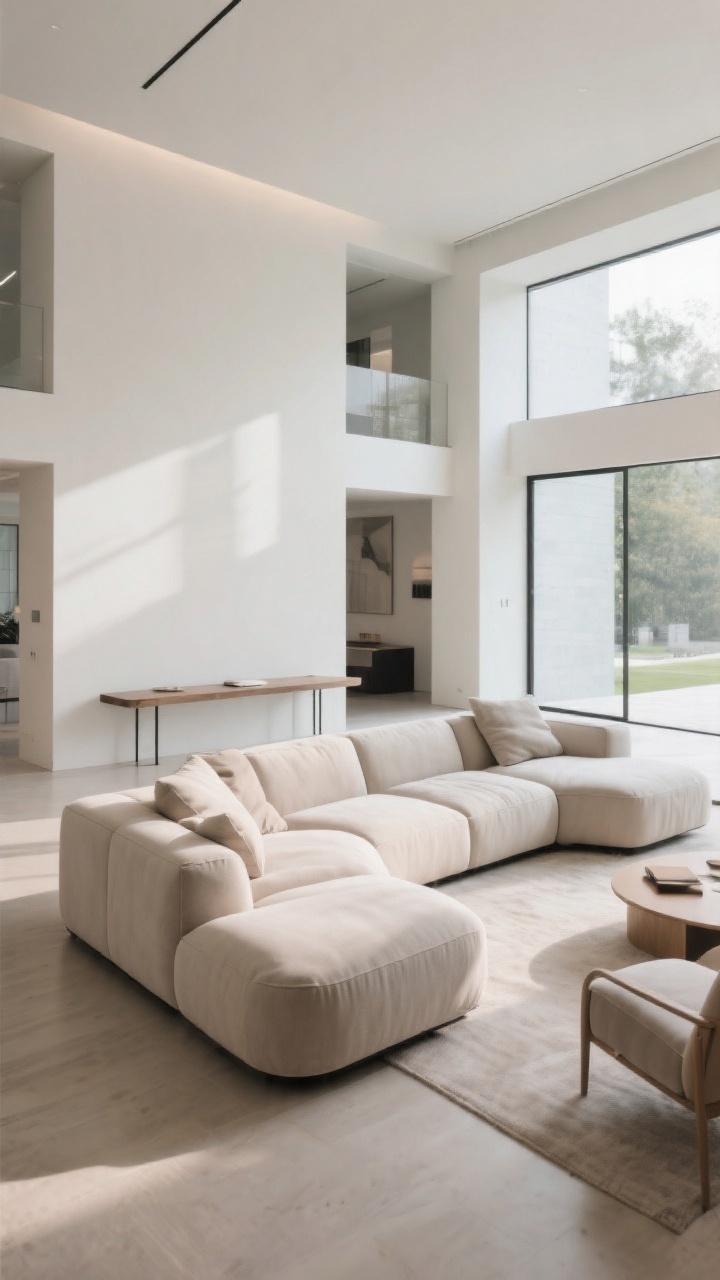
Sectionals are the Swiss Army knives of seating. A grand L- or U-shaped sectional zones open-concept spaces without walls and creates a natural gathering spot that says, “yes, stay awhile.” Bonus: you won’t need extra chairs cluttering the vibe.
They’re especially perfect for oddly shaped rooms that need strong lines to feel intentional. FYI, a chaise end is basically an instant nap license.
Smart Sectional Strategies
- Open-concept? Float the sofa to define the living area; back it with a console table.
- Small room? Tuck an L-shape into a corner to maximize floor space.
- Need flexibility? Choose a modular sectional so you can reconfigure for parties.
- Curve appeal: Rounded sectionals soften boxy rooms and look extra modern.
3. Depth = Luxe: The Nap-Worthy Metric
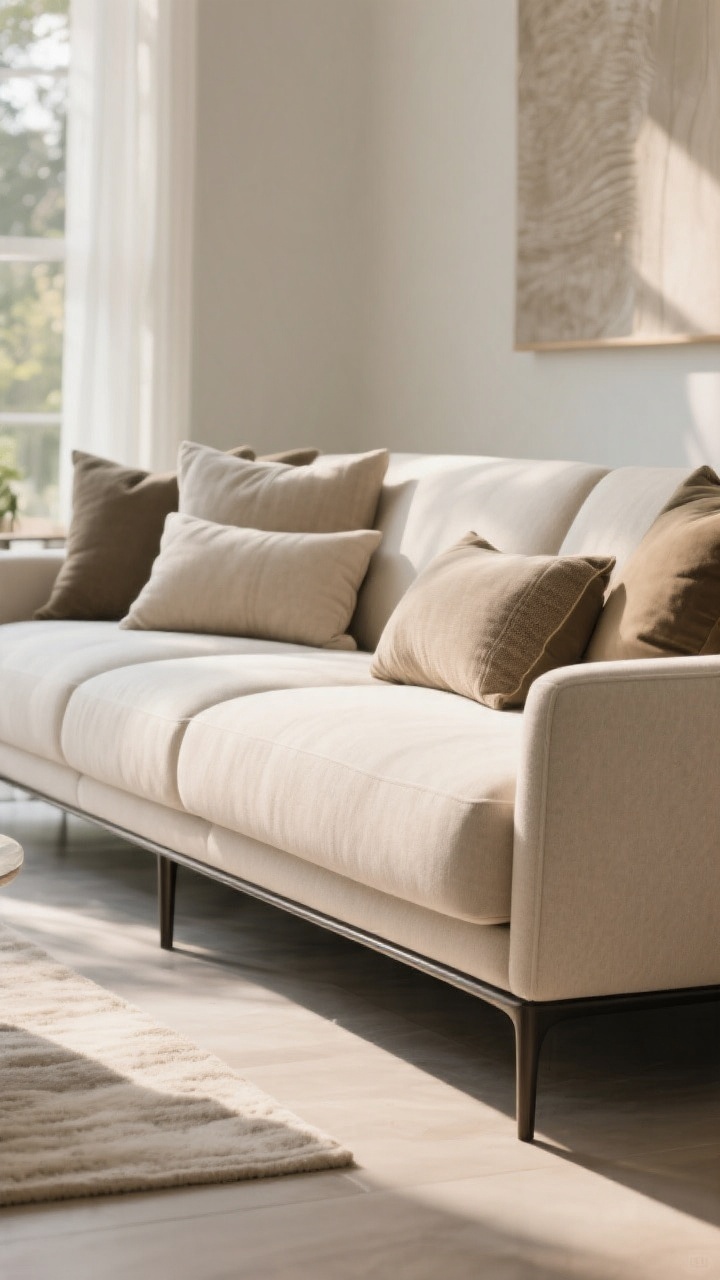
If you’ve ever perched on a shallow sofa like it was a bus stop bench, you know: seat depth matters. Deeper sofas (think 24–28 inches of usable depth) read more high-end and are legitimately more comfortable for lounging, movies, and that “accidental” Sunday afternoon nap.
Paired with low arms or throw pillows, a deep sofa makes the room feel indulgent without shouting about it.
Pick the Right Depth
- Tall folks: Aim for 24–28 inches of seat depth; add lumbar pillows for support.
- Mixed heights? Layer pillows so everyone finds their sweet spot.
- Keep it airy: Slim arms and raised legs keep deeper sofas from looking heavy.
4. Color Psychology: Go Bold or Go Cozy
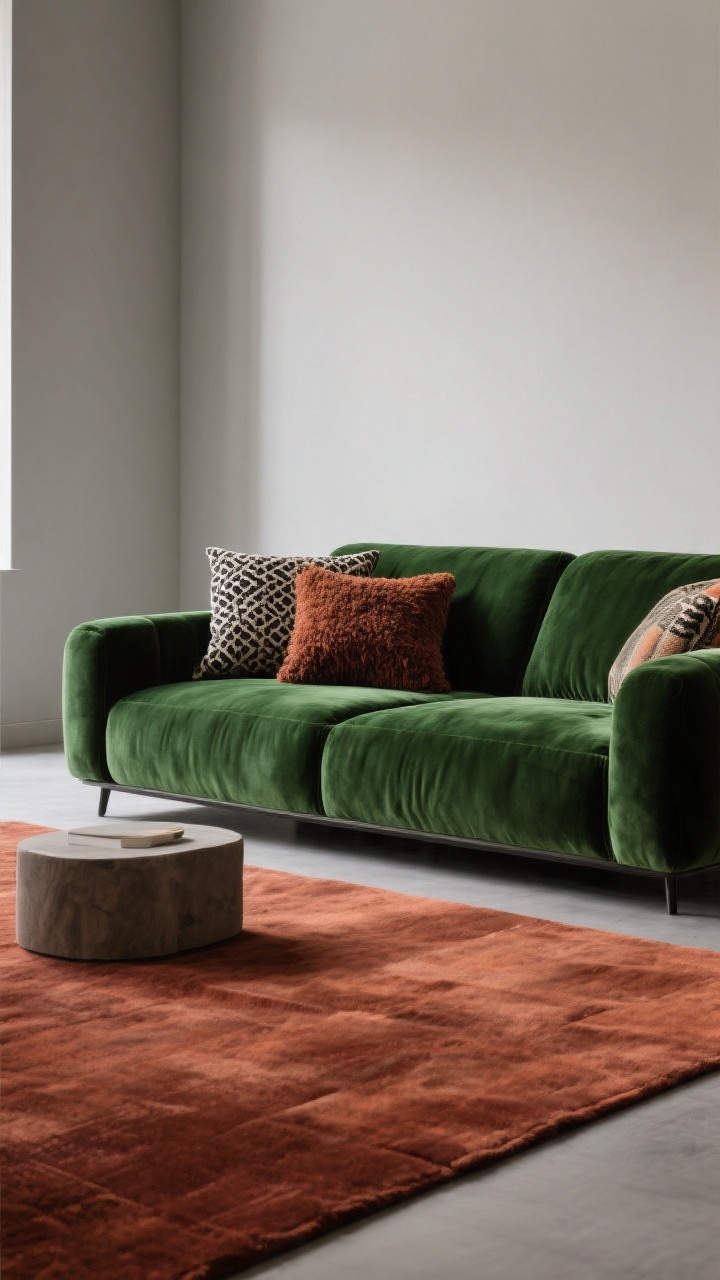
Big sofa, big color moment. A large piece in a rich neutral (beige, camel, charcoal) instantly elevates a modern space, while a bold hue turns it into art you can sit on. Either way, the eye sees a large, cohesive block of color—hello, visual calm.
IMO, this is where you set the room’s whole mood. Want serenity? Soft neutrals. Want drama? Jewel tones. Want neither? Greige is always there for you.
Color Play That Works
- Neutrals + texture: Bouclé, linen, or velvety chenille adds depth to simple palettes.
- Bold shades: Forest green, rust, or indigo read modern and photogenic.
- Monochrome magic: Match sofa and rug tones for a high-design, gallery feel.
- Contrast cushions: Use pillows to add pattern without committing your soul.
5. Coffee Table Chemistry: Size Up or Strike Out
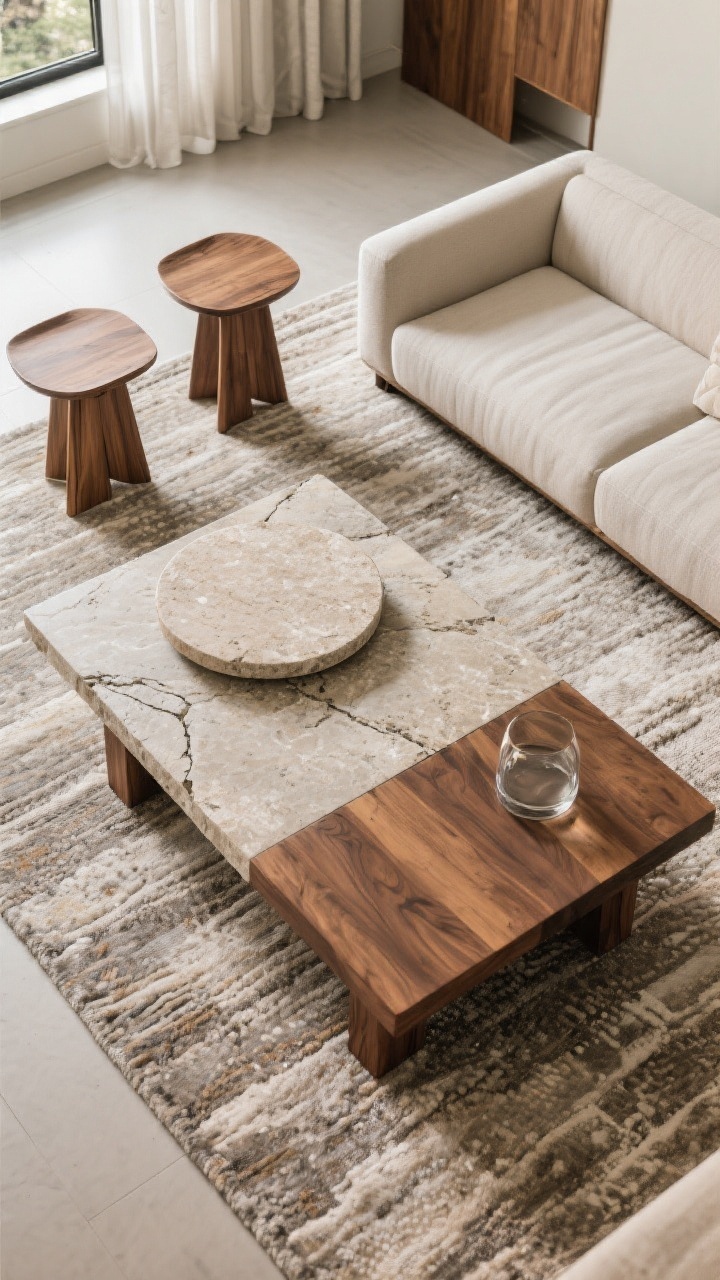
Here’s the unglamorous truth: a tiny coffee table next to a big sofa looks like a toy. Pair your oversized seating with a substantial coffee table (or two) to balance proportions and keep function on point.
Also, don’t be afraid to mix shapes. A long sofa plus a round table equals instant symmetry without the math headache.
Proportion Rules of Thumb
- Length: Coffee table should be ~2/3 the sofa length.
- Height: Within 1–2 inches of the seat height for comfy reach.
- Two’s company: Nesting tables or twin ottomans for modular layouts.
- Material mix: Wood warms, stone elevates, glass lightens the visual weight.
6. Styling the Perimeter: Scale Your Accents (Not Your Clutter)
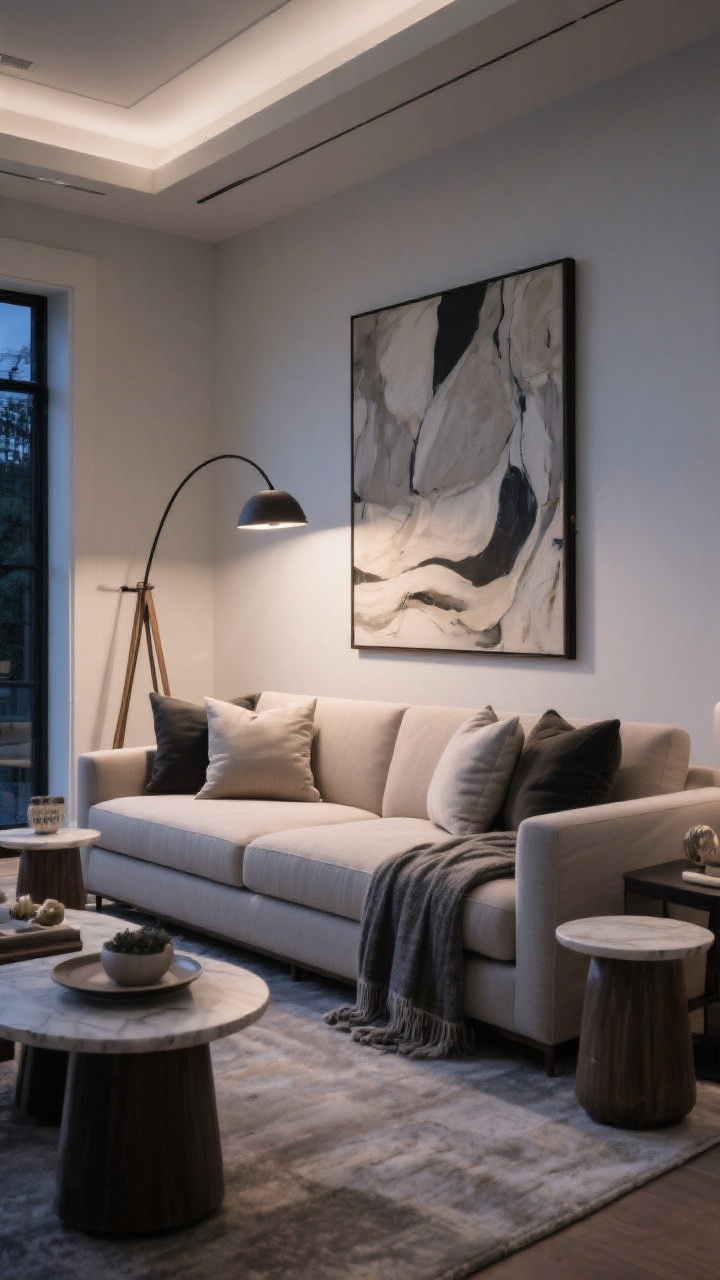
When the sofa goes big, the accessories need to follow suit. Think oversized art, tall floor lamps, and substantial side tables. Tiny lamps and dinky frames will just disappear and make the room feel off-balance.
This is where a large sofa actually makes styling easier: fewer pieces, bigger impact, cleaner lines. Less clutter, more wow.
Go Big (Strategically)
- Art: One large piece over the sofa or a tightly spaced gallery with consistent frames.
- Lighting: Arc or tripod floor lamps add height and drama without stealing floor space.
- Side tables: 20–24 inches diameter for sectionals; match arm height for function.
- Throws & pillows: Mix sizes (20–24 inch pillows); keep palette tight for cohesion.
7. Real-Life Perks: Hosting, Kids, Pets, and Movie Nights
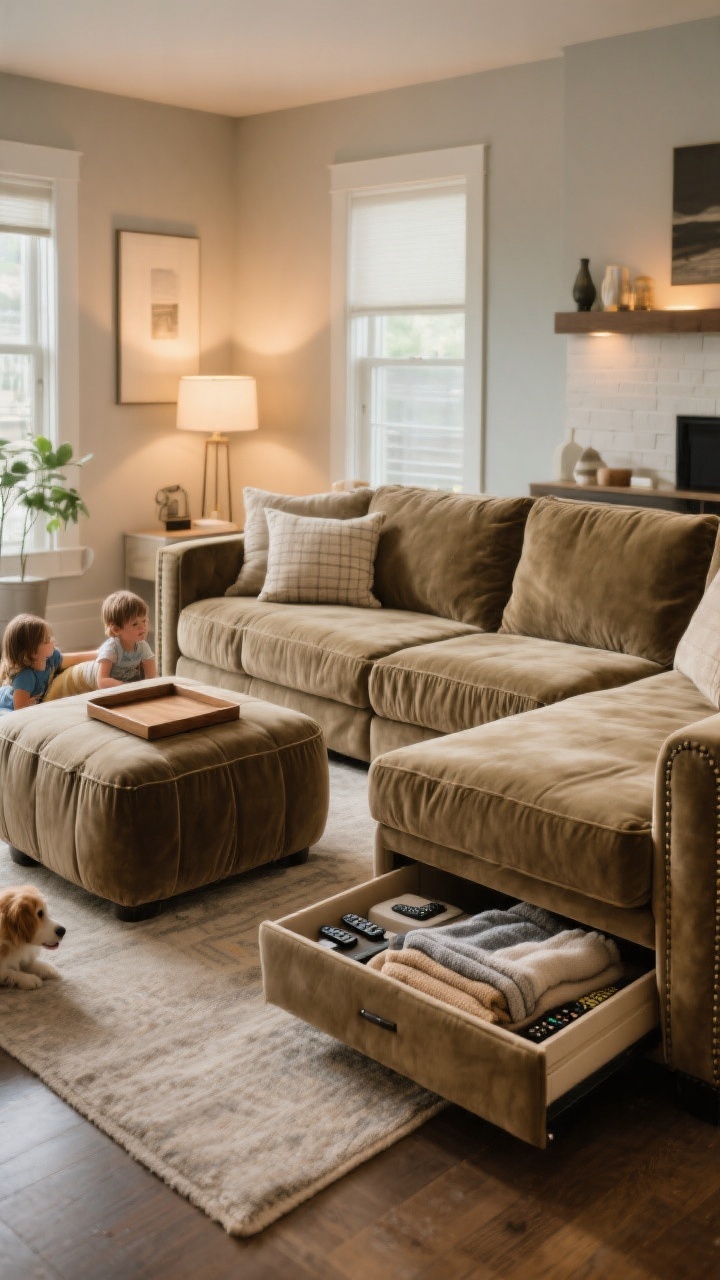
Let’s talk practicality, because aesthetics are great but life happens. A big sofa handles guests like a pro, gives kids room to sprawl, and offers pets their own kingdom. It’s basically community seating without the stadium vibes.
Maintenance is smarter too if you choose the right finishes. FYI, performance fabrics exist for a reason—wine and Cheetos included.
Make It Liveable
- Fabric first: Performance velvet, treated linen, or tight weaves for durability.
- Removable covers: Slipcovers or zip-off cushions make cleaning painless.
- Ottoman add-on: Use a large ottoman with a tray for extra seating and feet-up comfort.
- Storage wins: Look for hidden storage chaises to hide blankets and random remotes.
Here’s the bottom line: a bigger sofa doesn’t just look modern—it feels modern. It tells your space what it’s supposed to be, welcomes everyone in, and makes everyday living feel a touch more luxe. Ready to upgrade your lounge game? Go big, add a killer rug, and let the rest of the room fall in line. Your future movie nights will thank you.