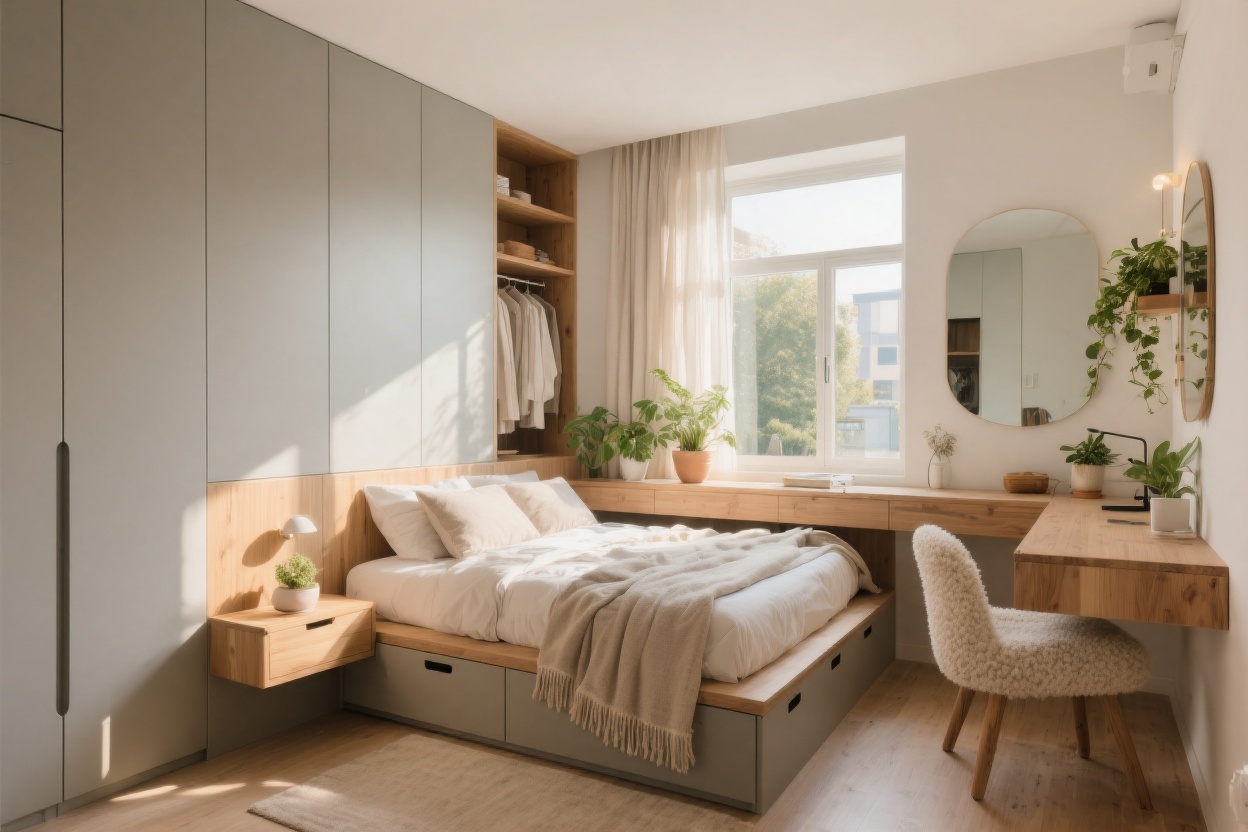
Your bedroom is tiny? Cool—mine too. But small doesn’t mean sad. With a few clever tweaks, you can turn that “is this a closet?” energy into a curated, cozy retreat that still fits real life. Ready to make every inch work overtime? Let’s get into the good stuff.
1. Float Your Furniture, Free Your Floor
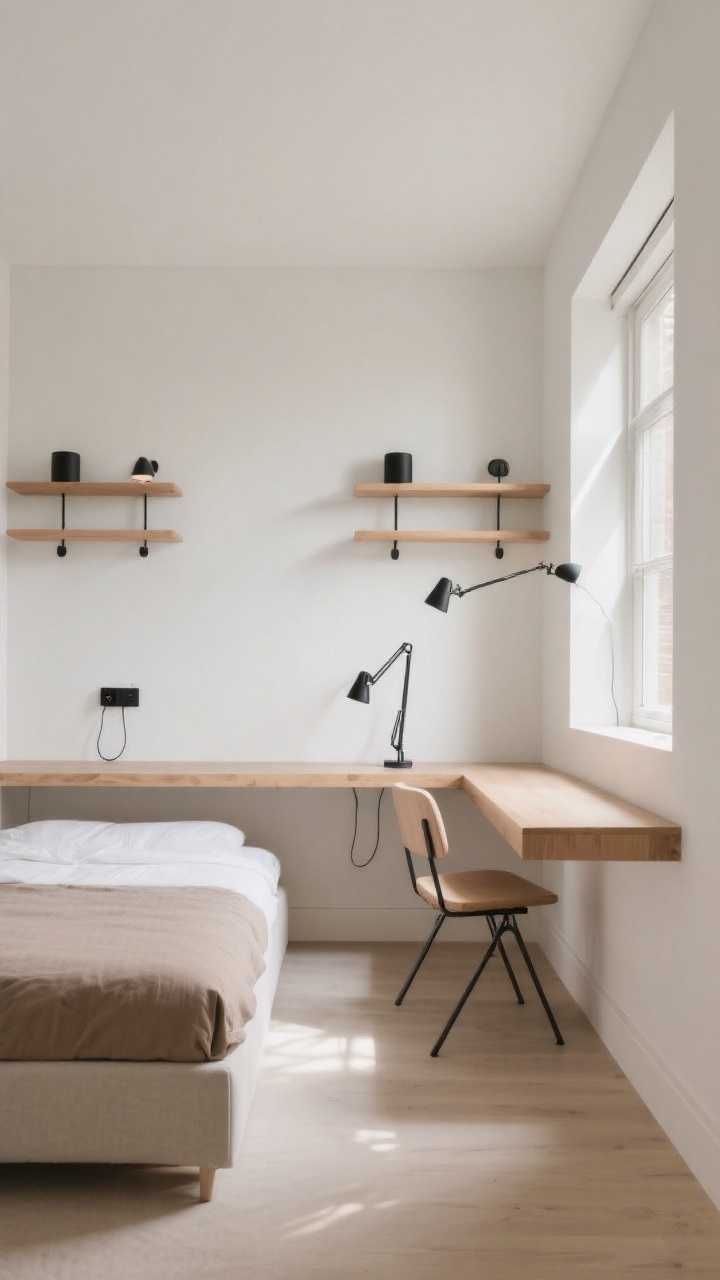
When square footage is scarce, your walls become prime real estate. Ditch bulky nightstands and go for **floating shelves** or **wall-mounted nightstands** to free up floor space and make cleaning easier (you’re welcome).
Why It Works
Raising surfaces off the floor creates visual breathing room, so the space feels bigger even if nothing actually moved. Plus, it’s an instant modern upgrade.
- Swap table lamps for sconces: Hardwire if you can; plug-in sconces are just as chic and renter-friendly.
- Mount a slim shelf as a bedside table: Enough for a book, glass of water, phone. Done.
- Go wall-mounted with desks/vanities: A floating desk + a foldable chair = mini office that disappears.
FYI: Keep wall-mounted pieces aligned at the same height to make the room feel calmer and more intentional.
2. Make the Bed Do Double (Or Triple) Duty
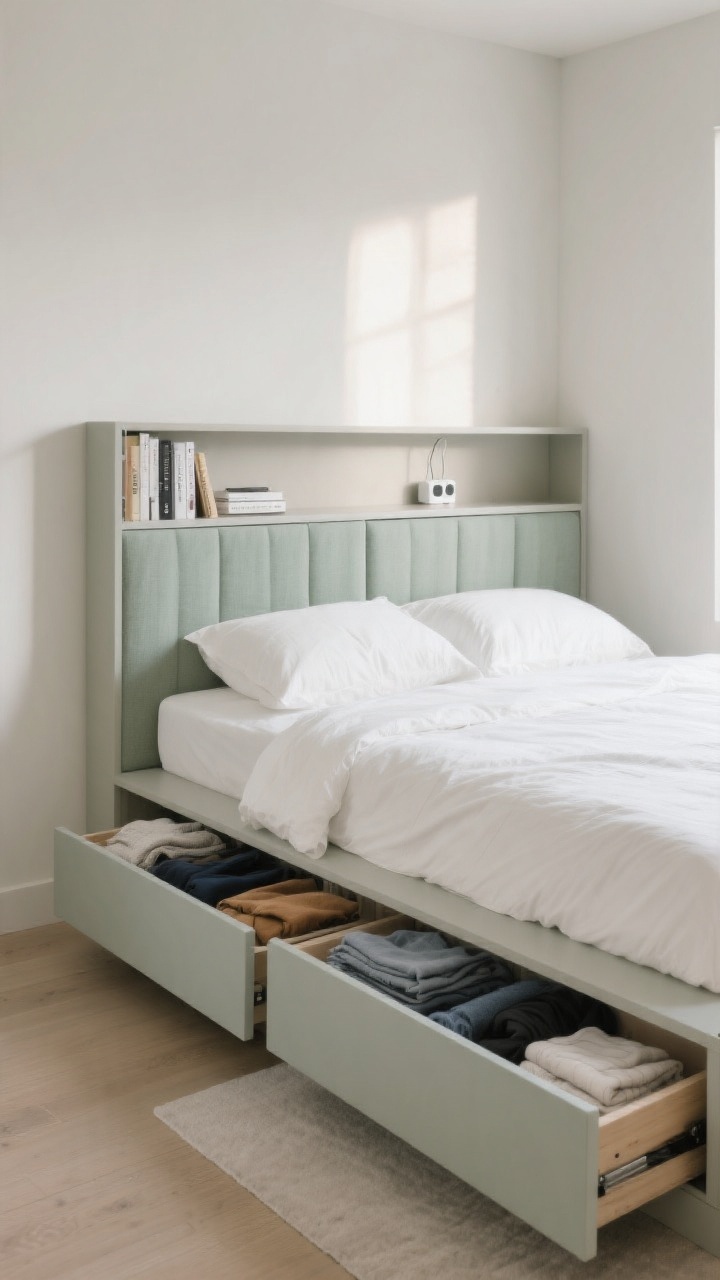
Your bed is the biggest thing in the room—so make it work as storage too. **Lift-up storage beds**, **drawers under the frame**, or even a **captain’s bed** can swallow off-season clothes, extra linens, or your secret throw pillow stash.
Smart Bed Moves
- Try a daybed or trundle: Great for studios or guest-friendly setups. Daybeds also open up floor space visually.
- Pick a slim, low-profile frame: Headboards can be built-in shelves—hello, book display and charging station.
- Use bed risers (tastefully): Hide bins behind a tailored bed skirt or a neat fabric panel.
Pro tip: Stick to **closed storage** near the bed. Minimal visual clutter equals a calmer, sleepier brain. Science-ish.
3. Build Vertical: Tall, Slim, And Seriously Useful
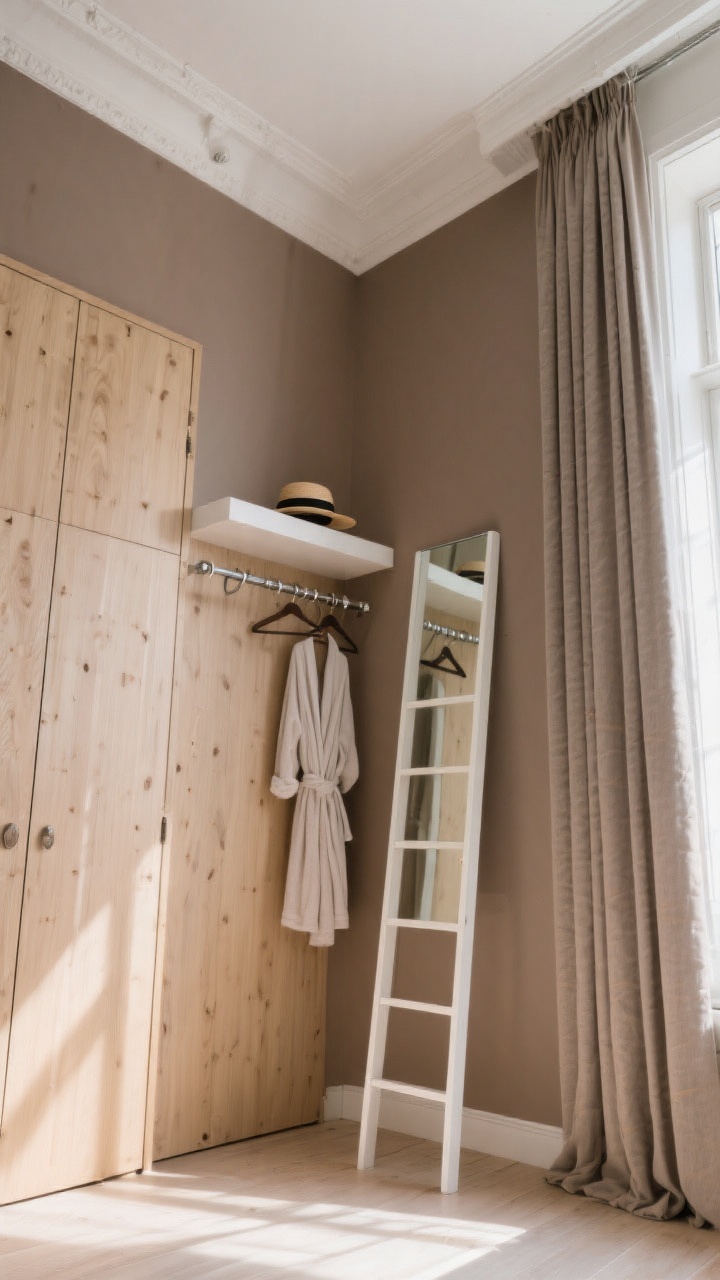
Short furniture chops up the room. Go vertical with **tall wardrobes**, **ladder-style shelves**, and **ceiling-high curtains** to draw the eye up and fake height. It’s architectural shapewear for your bedroom.
What To Prioritize
- Ceiling-high curtains: Mount rods a few inches below the ceiling and let the fabric kiss the floor. Instant drama.
- Tall wardrobes with doors: Corrals visual mess. Add interior organizers to double capacity.
- Over-door racks and hooks: For robes, bags, hats—use the space you already have.
Bonus move: A **floor-to-ceiling mirror** bounces light and makes the room feel twice as wide. Put it opposite a window if possible.
4. Zone Like A Designer (Even If It’s 10×10)
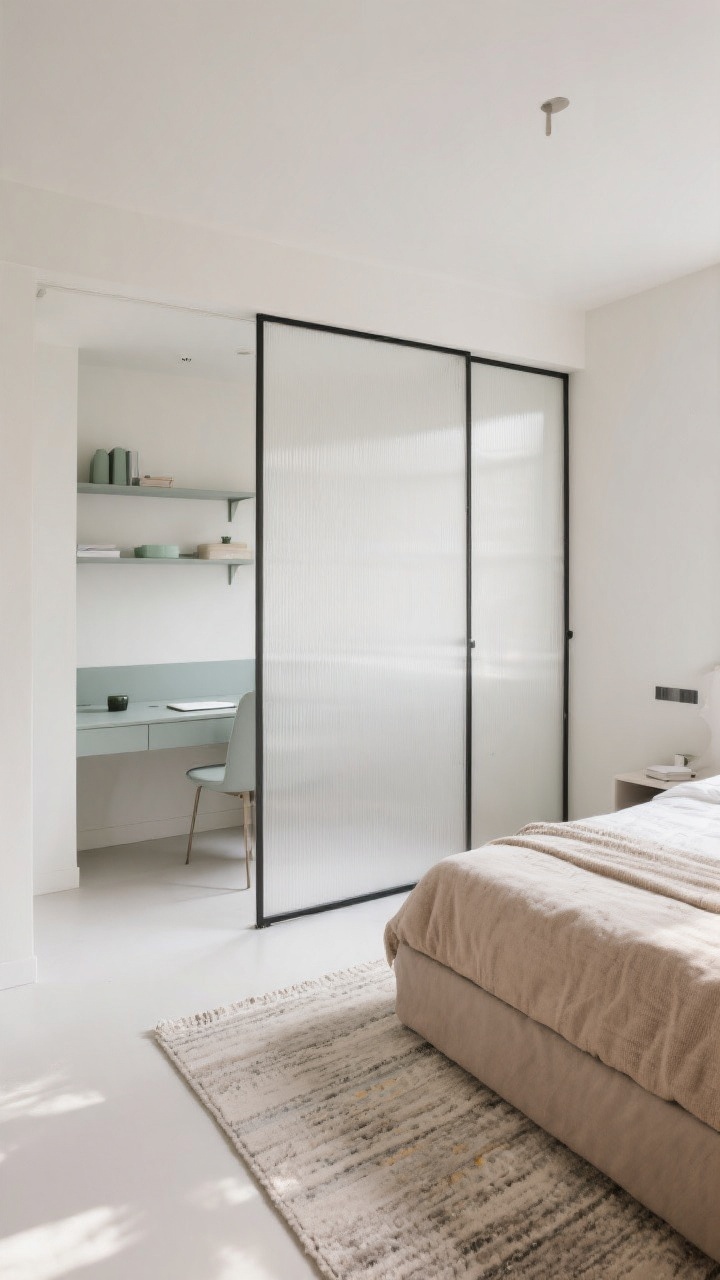
Small rooms still need zones. Create mini “destinations” for sleeping, dressing, and working to avoid that dorm-room vibe. A bit of **visual separation** goes a long way.
Easy Zoning Tricks
- Use a rug to define the bed area: Slide a 5×8 or 6×9 under the bottom two-thirds of the bed for balance.
- Try a slim room divider: A folding screen, curtain panel, or open shelving creates privacy without blocking light.
- Color-coding works: Keep your work corner in cooler tones and your bed zone warm and soft for chill vibes.
Keep walkways clear—no tight obstacle courses. If you bump your shin every night, the layout needs a rethink, IMO.
5. Master The Minimalist Color Trick (But Keep It Cozy)
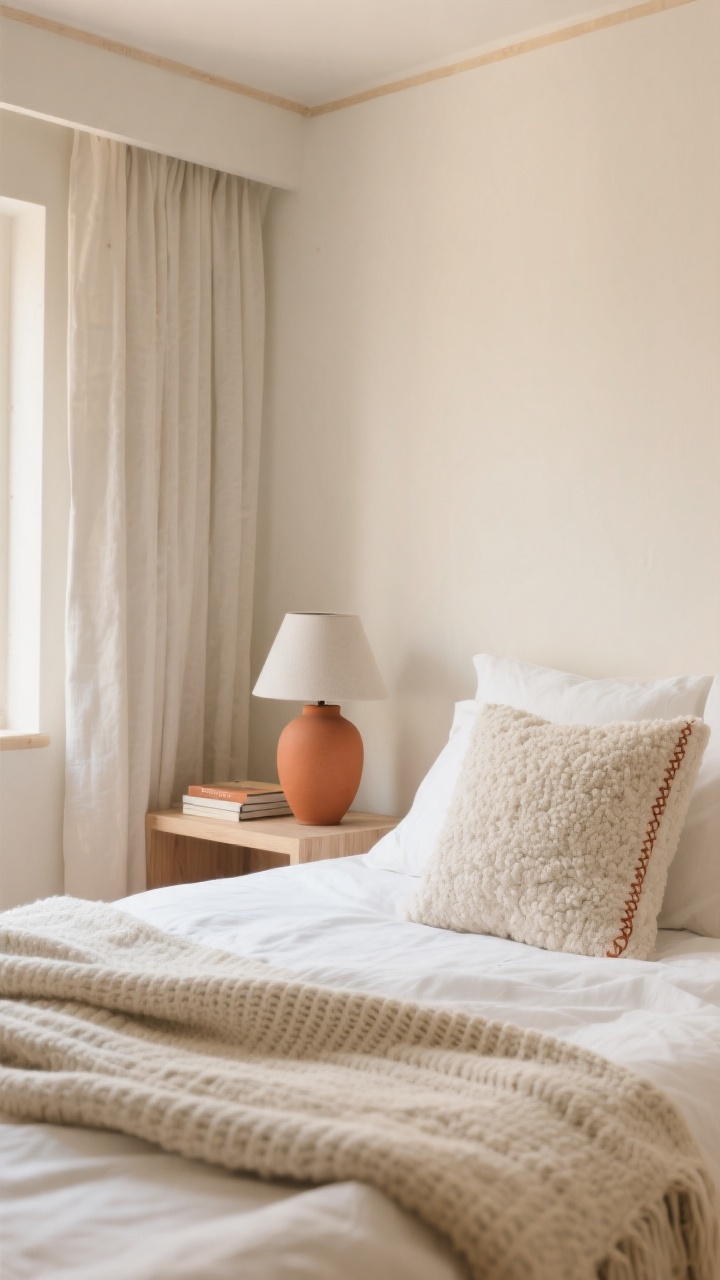
Neutral doesn’t have to be boring. Light, cohesive tones expand a space visually, while **texture** keeps it from feeling flat. Think soft whites, warm taupes, or pale gray-green with layers of linen, boucle, and wood.
Color + Texture Formula
- Monochrome base: Walls, bedding, and curtains in similar tones create a seamless look.
- Add depth with texture: Knit throw, woven bench, matte ceramic lamp—simple materials, big impact.
- One accent color only: Keep it tight—maybe terracotta, deep navy, or moss. Repeat it three times in small doses.
Paint ceilings and trim the same color as the walls to blur edges. Suddenly, the room feels taller and calmer—like a hug, but make it design.
6. Hide The Clutter, Flaunt The Pretty
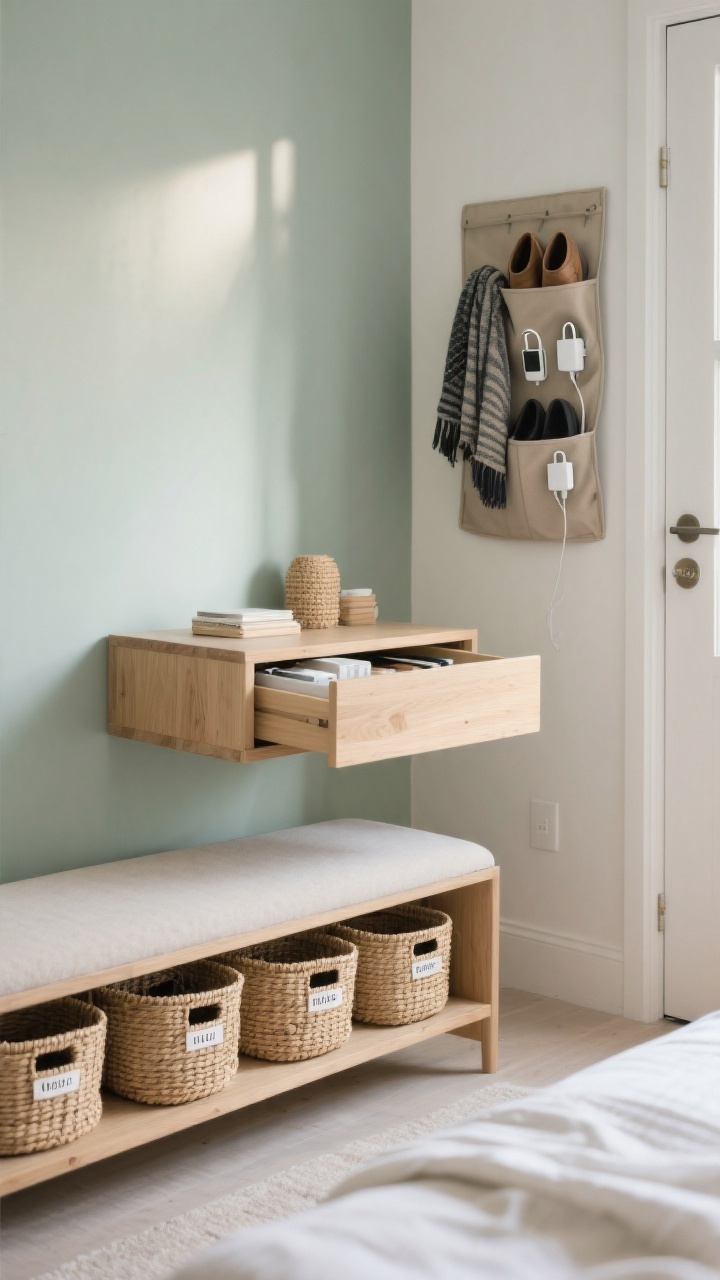
Small bedrooms expose everything. Solution: **closed storage for the messy stuff, open display for the nice stuff**. Your brain (and Instagram feed) will thank you.
Storage That Works Hard
- Nightstand with drawers: Top drawer for nightly essentials; bottom for tech or notebooks.
- Matching bins or baskets: Slide onto shelves or under benches—identical containers look intentional.
- Back-of-door pockets: Shoes, scarves, chargers—keep the floor clear and the door useful.
Label things you don’t use daily. Future-you will not remember which identical basket has extra pillowcases. Ask me how I know.
7. Light It Like A Boutique (Layer, Layer, Layer)
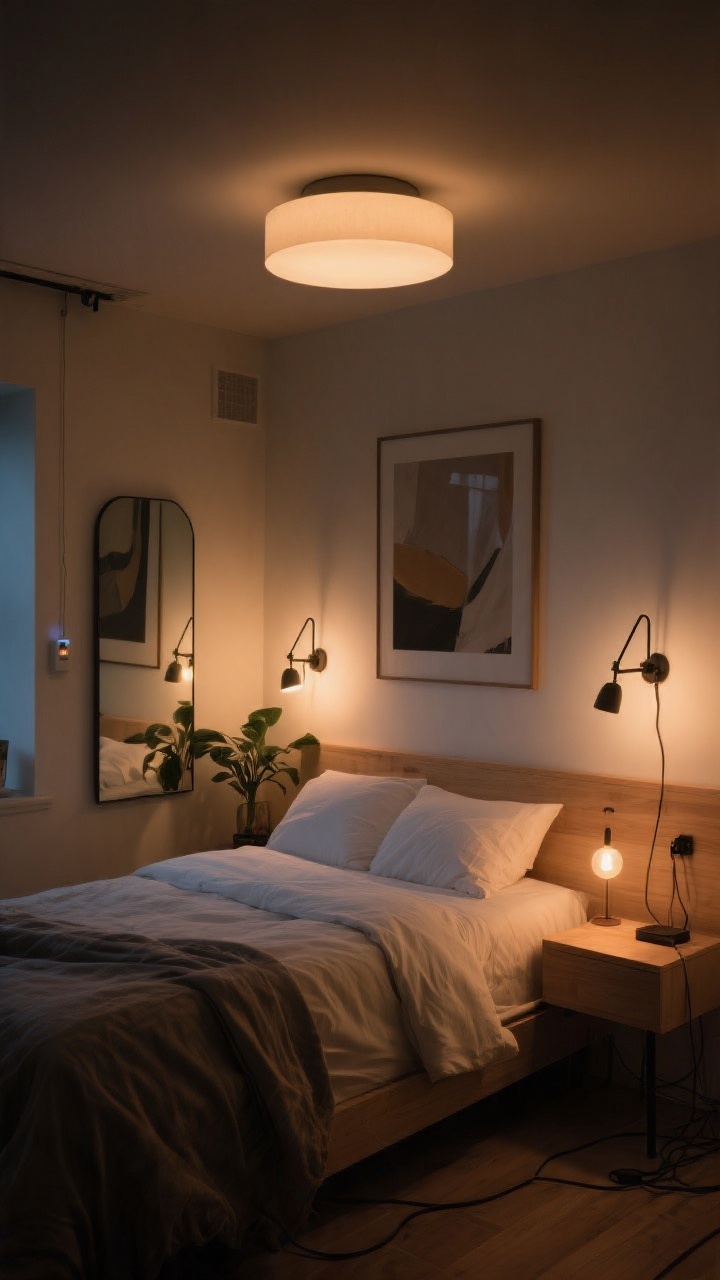
Lighting is the secret sauce of small rooms. Overhead light alone can feel harsh and clinical. Instead, layer **ambient**, **task**, and **accent** lighting so everything glows, not glares.
Lighting Game Plan
- Ambient: Flush-mount or semi-flush ceiling fixture with a warm LED (2700–3000K).
- Task: Wall sconces or swing-arm lamps for reading; a clip light for a desk nook.
- Accent: A tiny uplight behind a plant or mirror to create depth and softness.
Use **smart bulbs** to dim without rewiring. Set warm, low light in the evening and brighter, cooler light for making the bed or finding that one sock that vanishes weekly. FYI: A dimmer is basically a mood button.
Bonus Micro-Tips To Squeeze Even More Space
- Choose legs: Furniture with visible legs shows more floor, which visually enlarges the room.
- Scale matters: One larger art piece often looks better than a cluttery gallery wall in tiny rooms.
- Mirror math: Place mirrors to reflect light, not clutter. Facing a window is ideal; facing a pile of laundry is chaos.
- Cable control: Cord clips and cable boxes keep surfaces serene and your sanity intact.
Bottom line: Compact bedrooms can be mighty. With wall-mounted heroes, hard-working beds, vertical storage, clever zones, soft cohesive color, clutter control, and layered lighting, your small space will feel intentional, stylish, and surprisingly spacious.
You don’t need more room—you just need smarter moves. Now go float a shelf and feel smug about it.