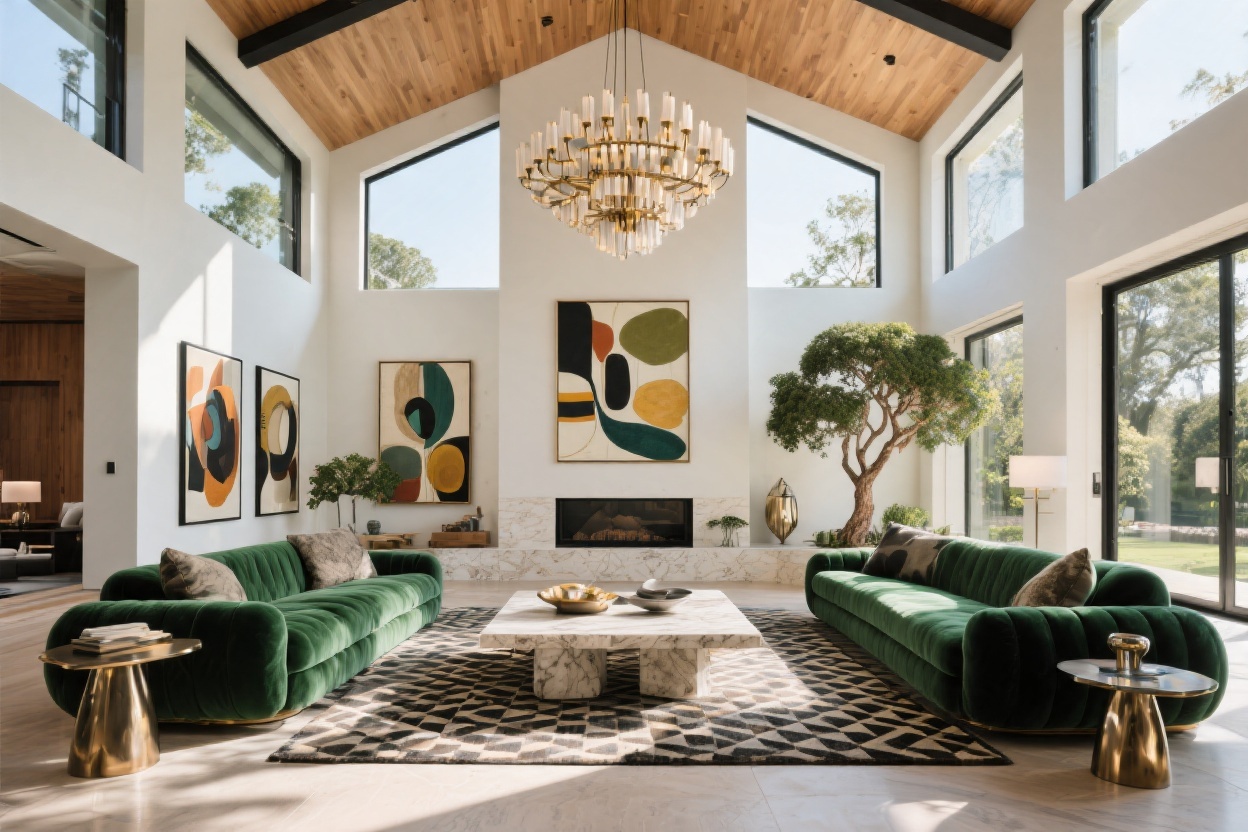
Got a big living room and zero clue what to do with all that glorious space? Lucky you. Big rooms are a design playground, but they can also feel cold or awkward if you don’t give them structure and personality. Let’s fix that with seven bold, conversation-starting moves that make your oversized space feel curated, cozy, and wildly impressive.
1. Create Commanding Zones (Without Walls)
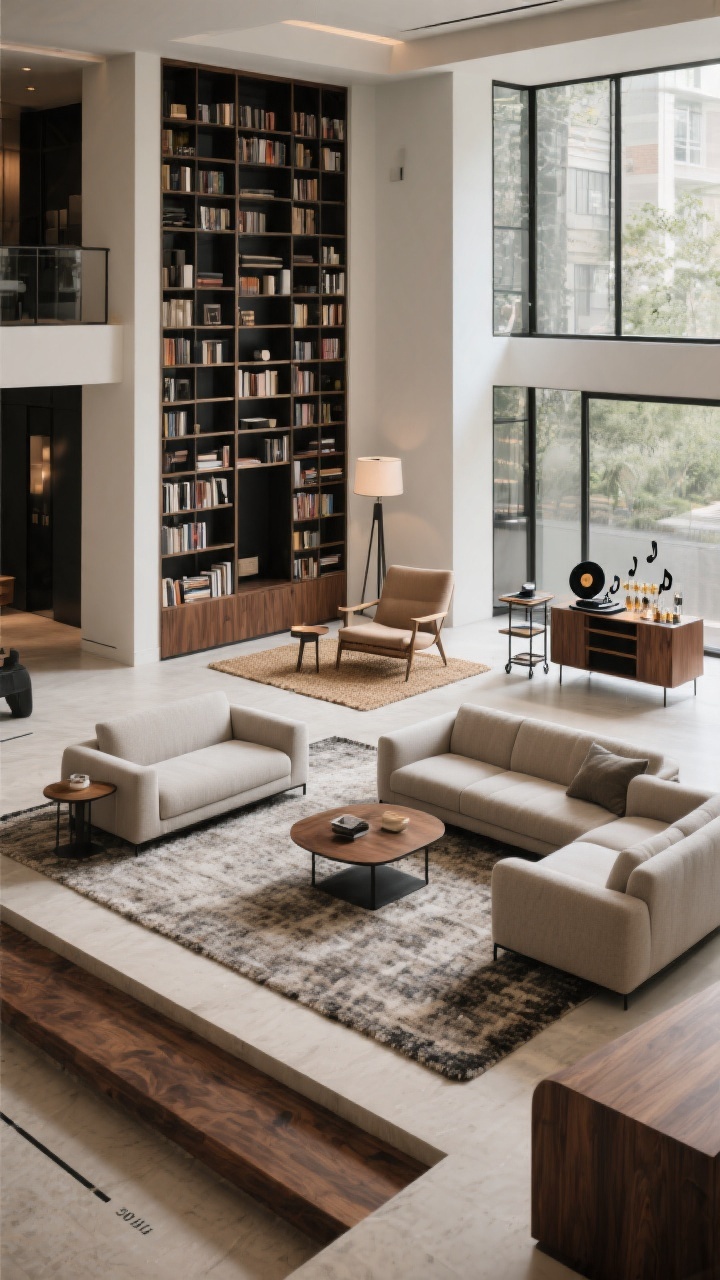
In a large living room, the trick is to add intentional zones that guide how people move and gather. Think: a conversation pit here, a reading nook there, and maybe a music corner or bar cart moment for good measure.
How To Pull It Off
- Anchor with rugs: Use a generous rug for each zone—don’t let your sofa’s front legs fall off the edge. It instantly defines a “room within a room.”
- Float furniture: Pull sofas and chairs away from walls to create intimate groupings. Leave a 30–36 inch walkway around them.
- Repeat materials: Use the same wood tone or metal finish across zones for cohesion, even if styles vary.
FYI: A single, massive sectional isn’t your only option. Try two sofas facing each other for a luxe, hotel-lobby vibe.
2. Go Oversized Or Go Home (Scale Is Everything)
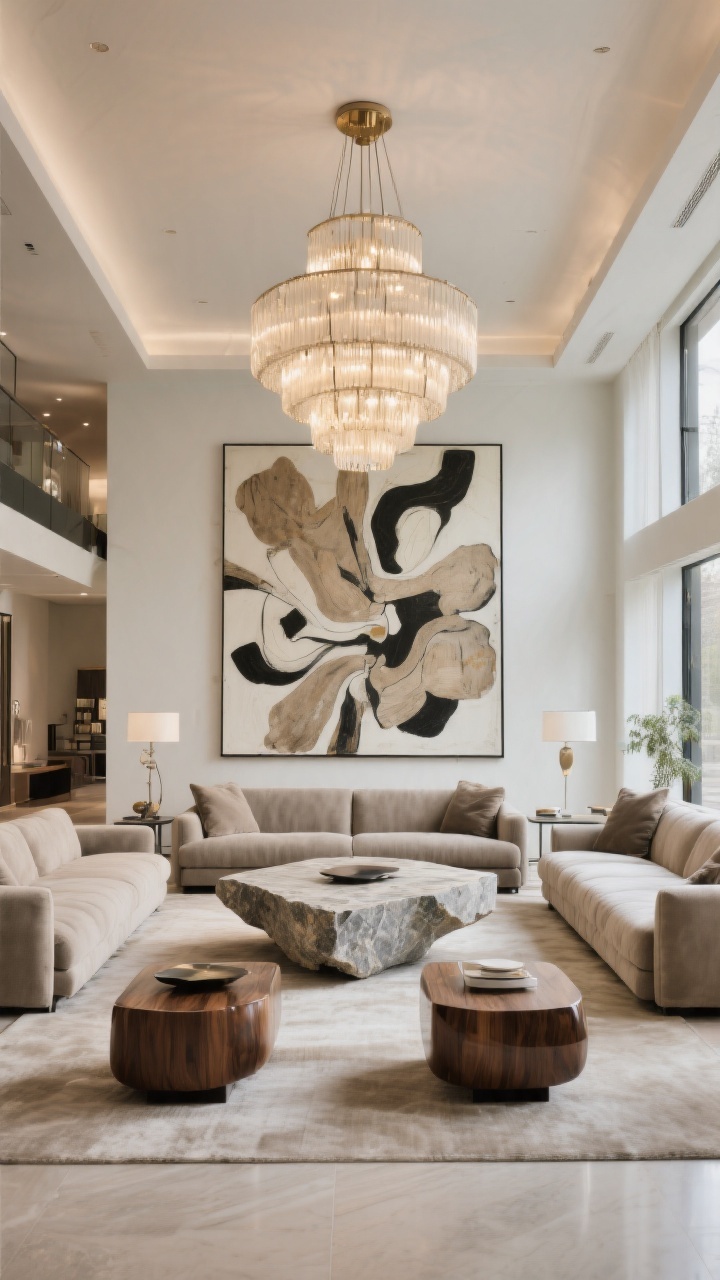
Large rooms devour small furniture. If your pieces look like dollhouse props, the room will feel empty no matter how many you add. Bring in oversized silhouettes that match the scale of your space.
What To Upsize
- Lighting: A large chandelier or a cluster of pendants over the main seating area becomes the room’s crown.
- Art: One massive piece beats a million tiny frames. Or create a bold salon wall that goes floor to ceiling.
- Coffee tables: Try a double coffee table arrangement or one statement slab—stone, wood, or lacquer.
Pro tip: When in doubt, measure. Furniture should feel generous, but leave pathways. If you’re squeezing, it’s not “bold,” it’s just crowded.
3. Color-Block With Confidence (Yes, You Can)
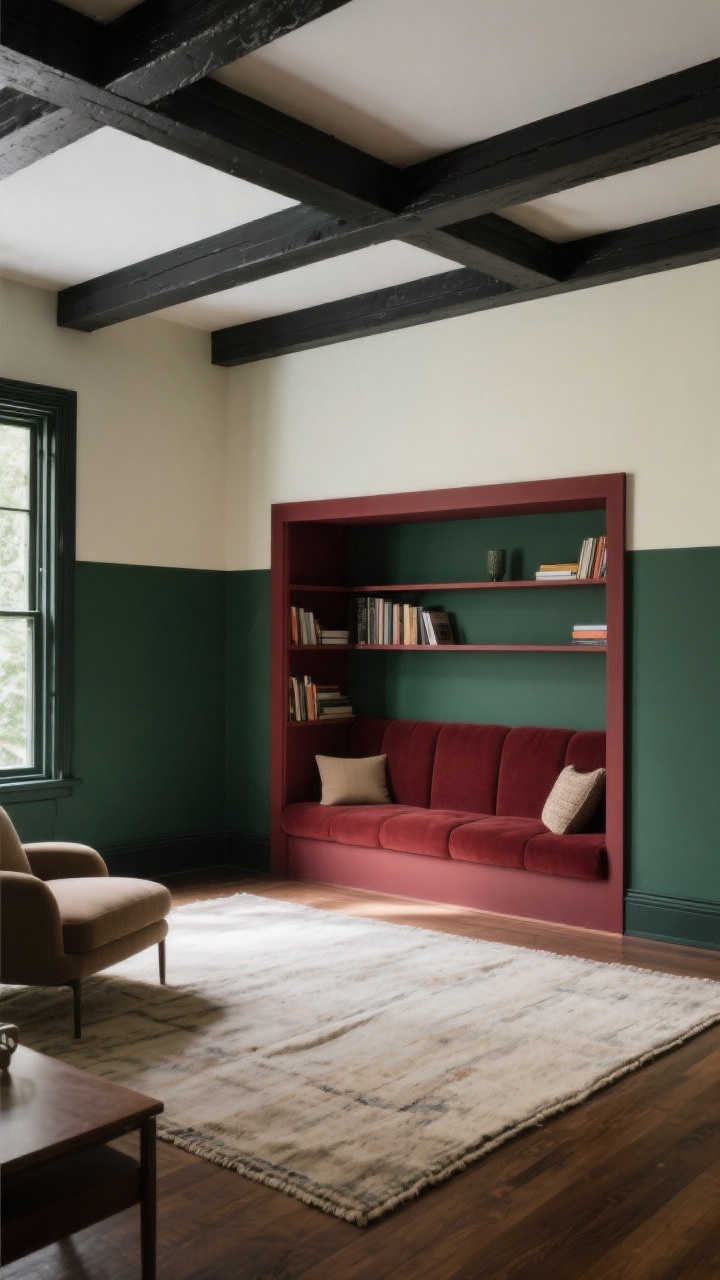
Big rooms can handle high-impact color. Instead of sprinkling accents, color-block walls, niches, or built-ins for drama that reads intentional, not chaotic.
Color Strategies That Work
- Two-tone walls: Paint the lower half a deep hue (moody green, oxblood, charcoal) and keep the top light. It grounds the room without turning it into a cave.
- Wrap a zone: Paint an entire reading nook, including shelving and trim, in one saturated color for a cocoon effect.
- Frame architecture: Highlight beams, arches, or columns in a contrasting tone to celebrate the room’s bones.
IMO, large rooms + daring colors = instant personality. Keep fabrics and rugs neutral if your walls are loud, or flip it and go bold with textiles instead.
4. Layer Textures Like A Stylist (Because Flat = Boring)
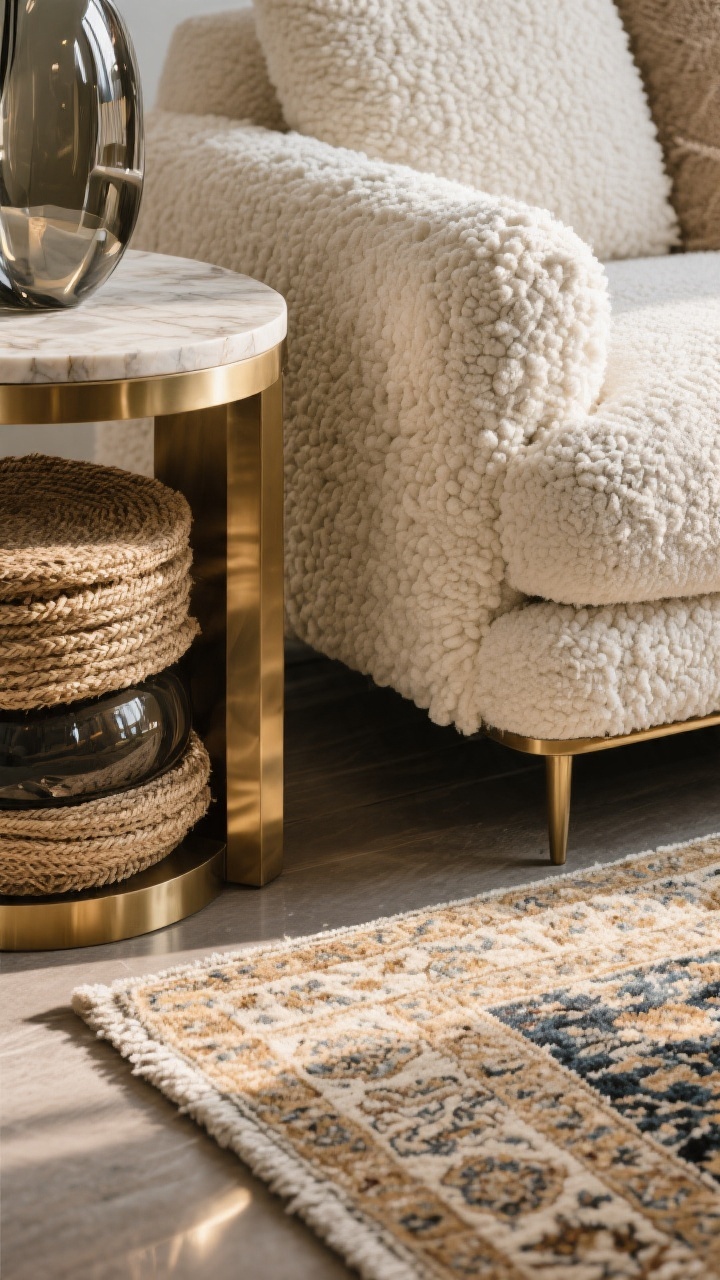
When square footage grows, so should your texture game. Layers add warmth, depth, and that “I live here and it’s fabulous” energy.
Try This Mix
- Soft vs. hard: Pair chunky boucle or velvet sofas with sleek metal or travertine tables.
- Natural elements: Jute or sisal rugs under a wool or vintage Persian brings in earthy grounding.
- Shine factor: Add a dash of polished brass, smoked glass, or mirror to bounce light and glam it up.
Quick test: If your eye can glide across the room without stopping, add something nubby, shiny, or sculptural to slow it down—in a good way.
5. Build A Spectacular Focal Wall
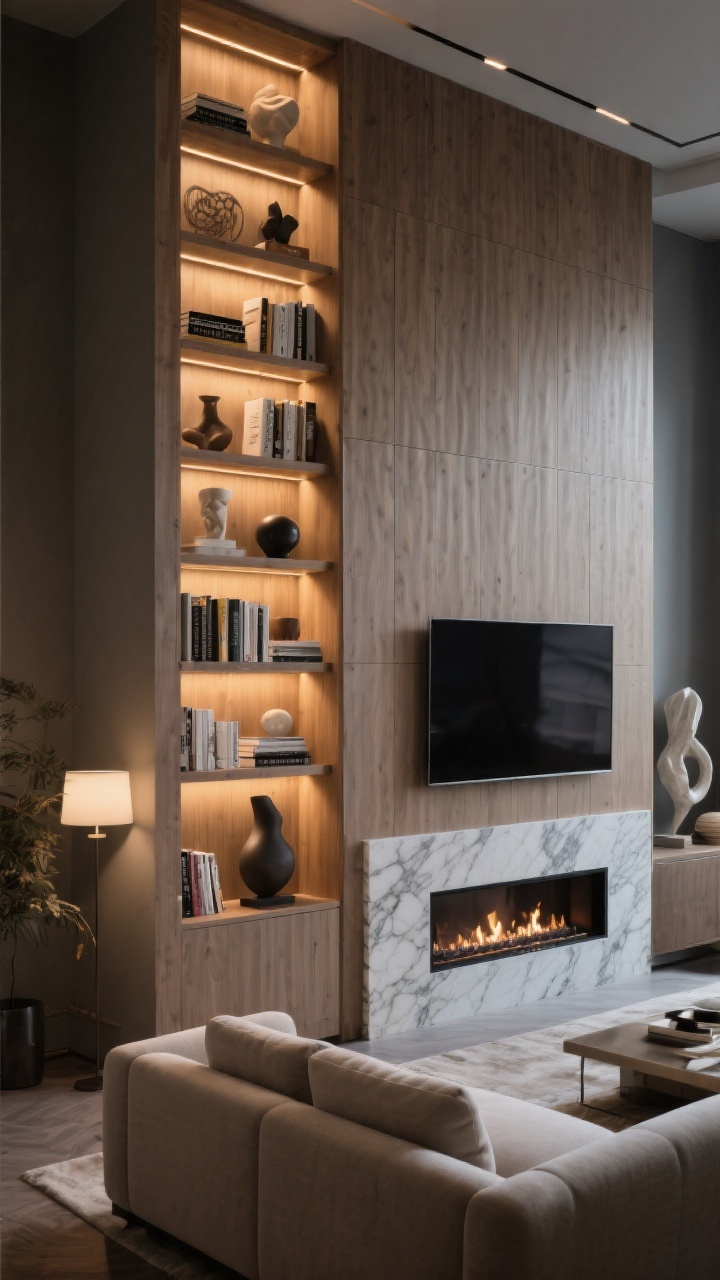
In a large room, your eye needs a place to land. Go all-in on a showstopper wall that earns its keep day and night.
Focal Ideas That Wow
- Architectural built-ins: Floor-to-ceiling shelving with integrated lighting turns books and objects into art.
- Stone statement: A full-height slab fireplace surround (marble, slate, or limestone) screams luxe without shouting.
- Overscaled media wall: Panel the wall in wood, microcement, or fluted detailing, then float the TV within it.
Balance the rest of the room with quieter choices so your focal moment can actually… focus. Think of it like a runway look with one dramatic piece.
6. Play With Symmetry—Then Break It
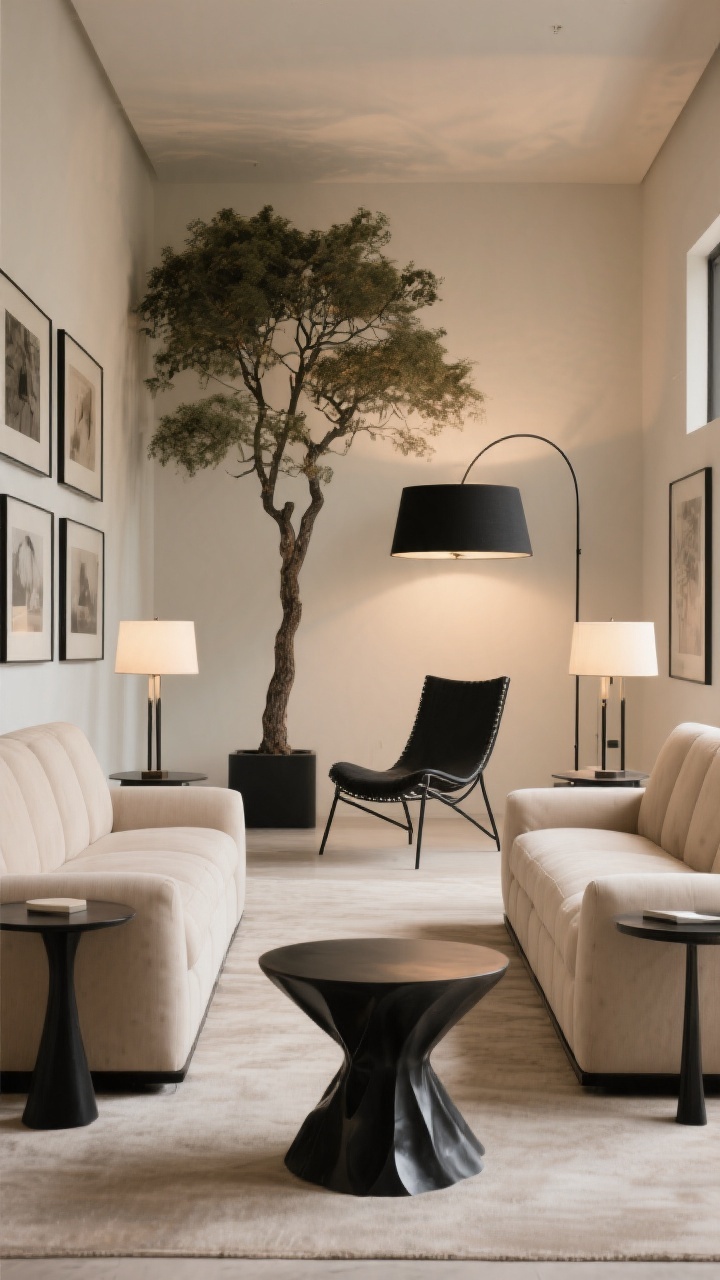
Symmetry brings order to large spaces, but perfect mirror images can feel stiff. Use structured symmetry as your base, then add a twist for personality.
Design Moves
- Start symmetrical: Two sofas facing, matching floor lamps, and twin side tables create instant polish.
- Break the mirror: Introduce an asymmetrical lounge chair, a sculptural floor lamp, or an off-center art grouping.
- Mix heights: Balance low, lounging pieces with tall elements—bookcases, trees, or statement lamps—for an elevated skyline.
It’s like wearing a tailored suit with sneakers. Intentional, relaxed, and cooler than trying too hard.
7. Light In Layers (Your Secret Weapon)
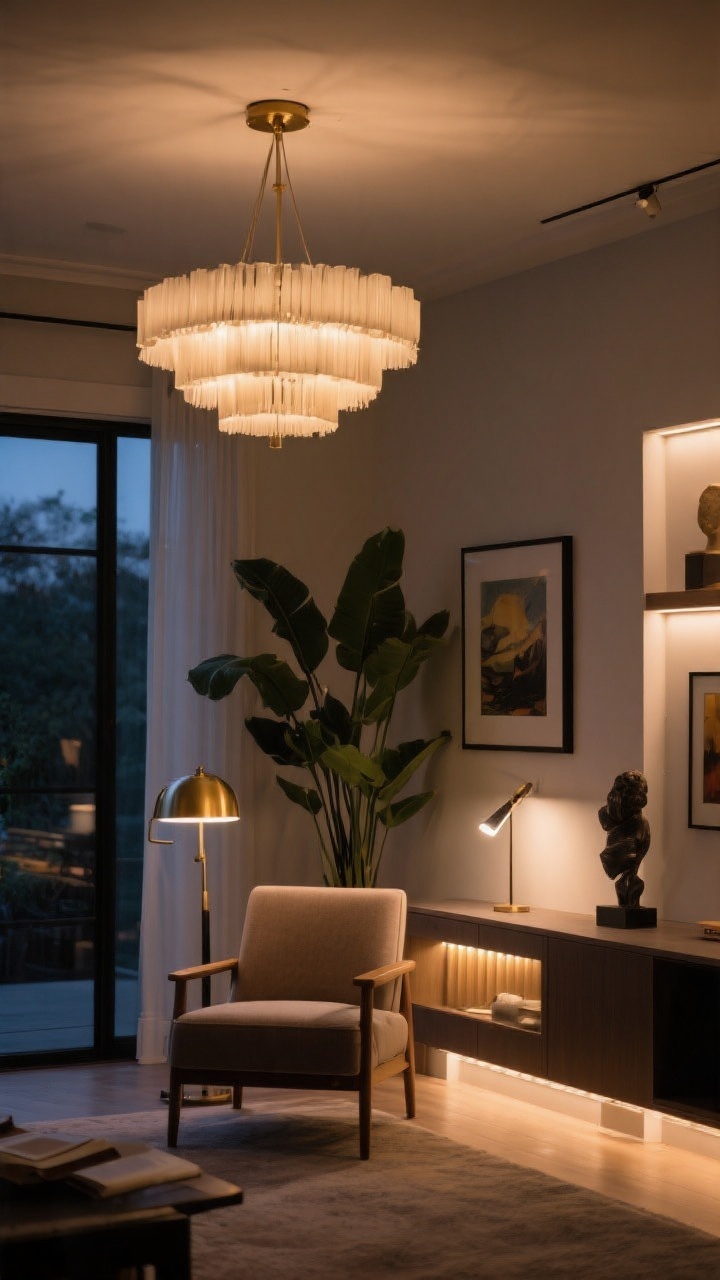
Flat overhead lighting kills ambiance. In a large room, you need layers of light to shape mood, highlight zones, and make evenings feel magical.
The Three-Layer Recipe
- Ambient: Chandeliers, pendants, or cove lighting to wash the room with a soft glow. Put them on dimmers—non-negotiable.
- Task: Reading lamps by chairs, picture lights over art, and directional floor lamps where action happens.
- Accent: LED strips in built-ins, uplights behind plants, or a small spotlight on a sculpture for gallery vibes.
FYI, bulbs matter. Aim for warm 2700–3000K with high CRI so colors look rich and inviting, not like a dentist’s office.
Bonus Tips To Tie It All Together
- Repeat a color or material in at least three places for flow—like black metal on lighting, frames, and a console base.
- Mind the negative space: Leave breathing room between zones so your big room feels curated, not cluttered.
- Go green (literally): Tall trees—olive, ficus, or palm—fill vertical space and soften corners.
Big living rooms aren’t a design problem—they’re a flex. Choose one bold move from each section, keep your scale game strong, and layer like you mean it. Before you know it, your space won’t just look finished—it’ll feel unforgettable. Now cue the playlist and let that chandelier earn its keep.