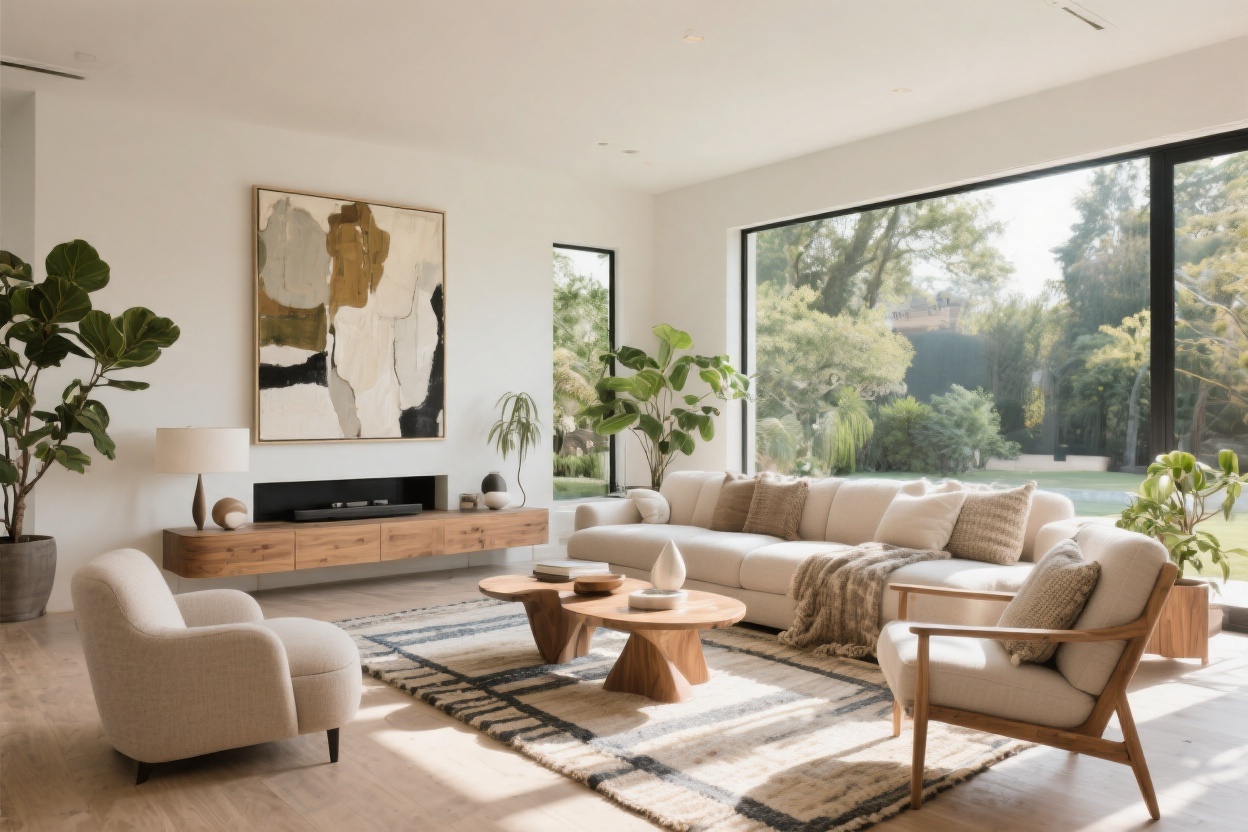
Your big, beautiful couch is the main character—no question. The trick is giving it a layout that makes the whole room sing instead of swallowing the space. Ready for smart, stylish, and super livable setups? Let’s map it out.
1. Anchor The Room With A Bold Focal Point
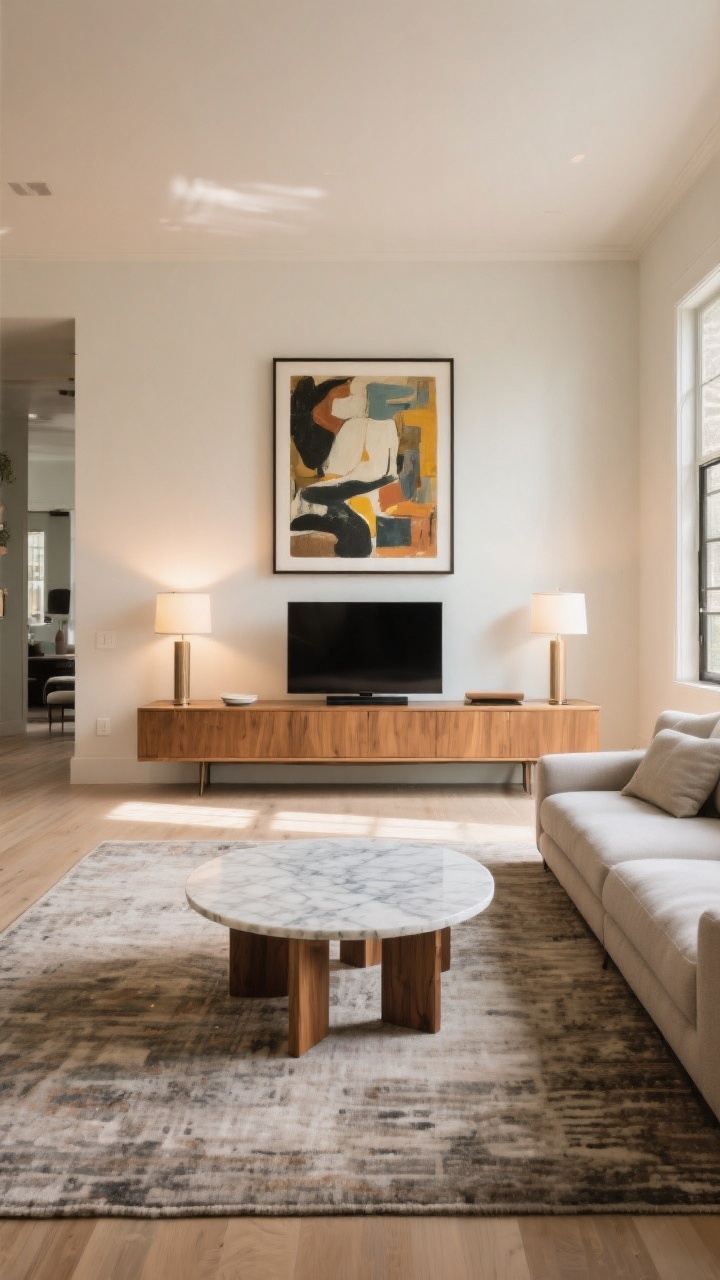
Big couch energy needs a destination. Point it toward a strong focal point—a fireplace, a large art piece, or a low media console. This grounds the sofa and stops it from feeling like a floating island in a furniture ocean.
How To Lock It In
- Center the sofa on the focal point, not the room. Perfection isn’t the goal—alignment is.
- Add a substantial rug (8×10 or larger) so the front legs sit on it. Instant cohesion.
- Use a statement coffee table to bridge the gap—round for flow, rectangular for order.
FYI: If your TV is the focal point, keep the center of the screen about eye level when seated (roughly 42–48 inches). Your neck will thank you.
2. Float The Sofa (And Create Natural Pathways)
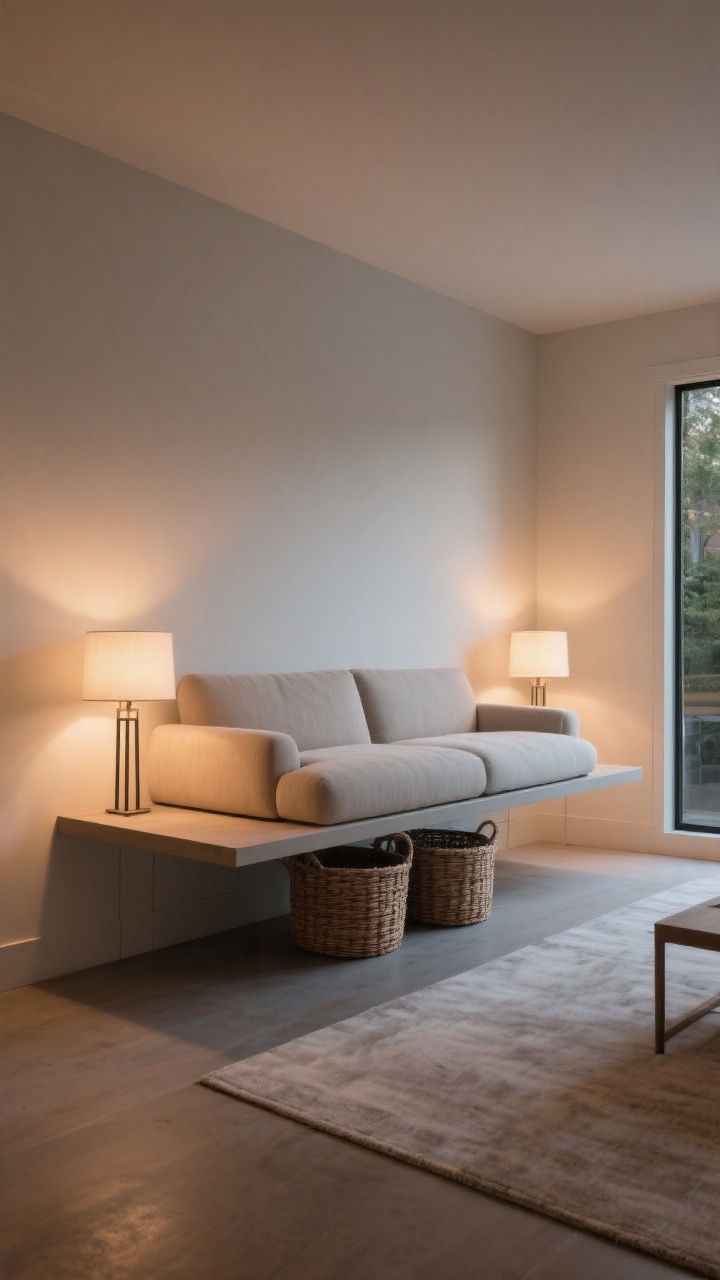
Hugging walls is a rookie move with oversized couches. Try floating the sofa a few inches—or even feet—off the wall to create breathing room and better traffic flow.
Why It Works
- Pathways appear behind or around the sofa, so people aren’t doing acrobatics to cross the room.
- It balances the visual weight and makes the room feel intentionally designed.
Pro Moves
- Place a console table behind the sofa with lamps or baskets for stealth storage.
- Use two slim floor lamps flanking the back corners—no table needed, just ambiance.
- Leave a 30–36 inch walkway where possible. Your shins will avoid bruises, promise.
3. Build Zones With Chairs (Instead Of One Giant Blob)
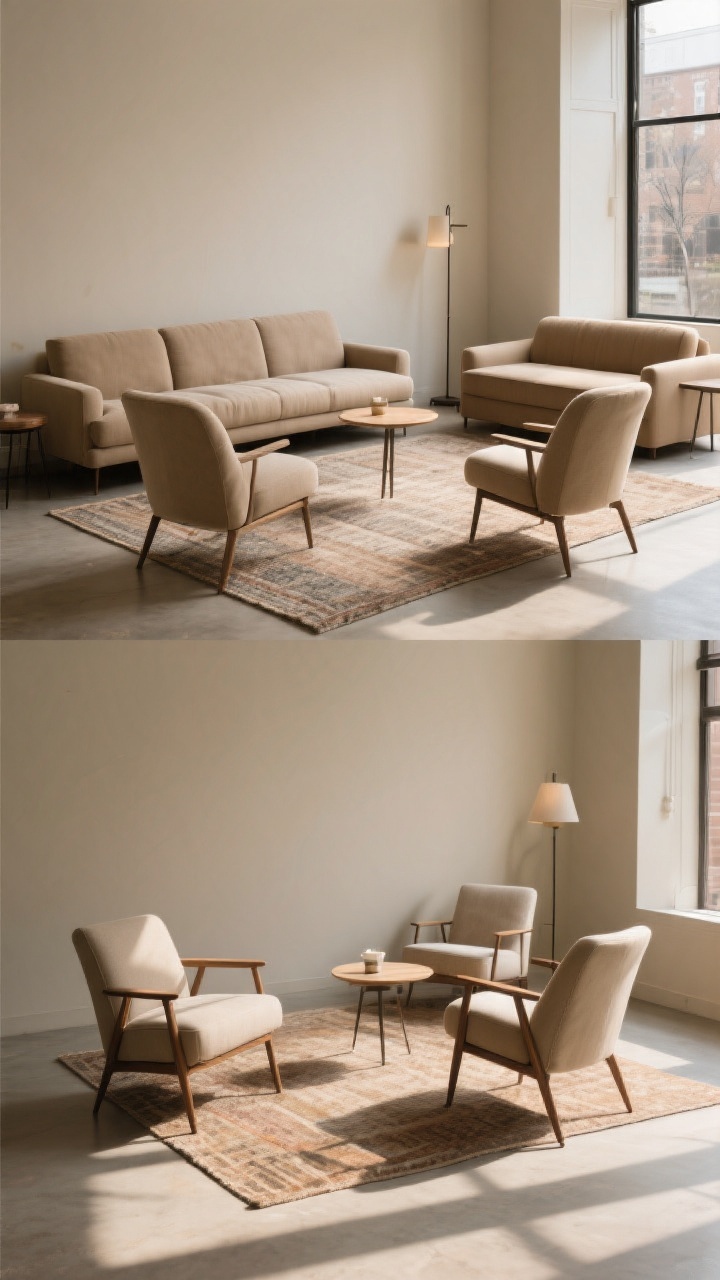
A large couch is a great anchor, but don’t let it monopolize the room. Create conversation zones with accent chairs or a petite loveseat across or at an angle.
Layout Options That Always Work
- Symmetry play: Sofa + two matching chairs facing it. Clean, classic, always chic.
- The L-shape: Sofa plus one chair at 90 degrees for a relaxed hangout spot.
- The angle trick: Float two chairs at 30–45 degrees to soften corners and boost flow.
Keep the seat-to-seat distance around 7–9 feet for cozy convos without shouting. Think café vibes, not conference room.
4. Choose A Coffee Table That Fits (Not Fights) The Sofa
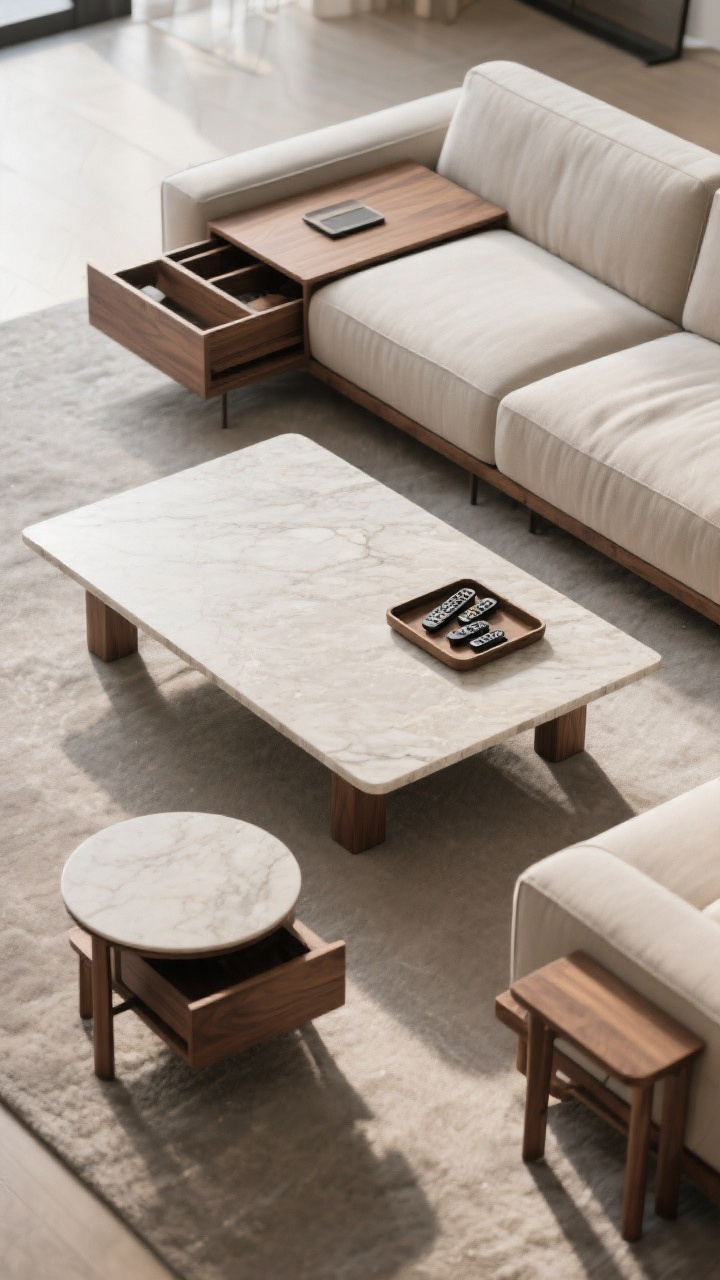
A dinky coffee table next to a mega couch? Chaos. You want a piece that’s two-thirds the sofa length and about the same height as the seat (usually 16–18 inches).
Shape Matters
- Round or oval if you need easy circulation and fewer knee bruises.
- Rectangular for clean lines and long sectionals.
- Nesting tables if you like flexible surfaces and bonus style points.
Usability Rules
- Leave 14–18 inches between sofa and table—close enough for snacks, far enough to stand up.
- If the sofa is deep, add side tables so everyone gets a landing spot for drinks.
- Corral remotes and clutter with a tray—function meets pretty.
5. Treat The Sectional Like Architecture
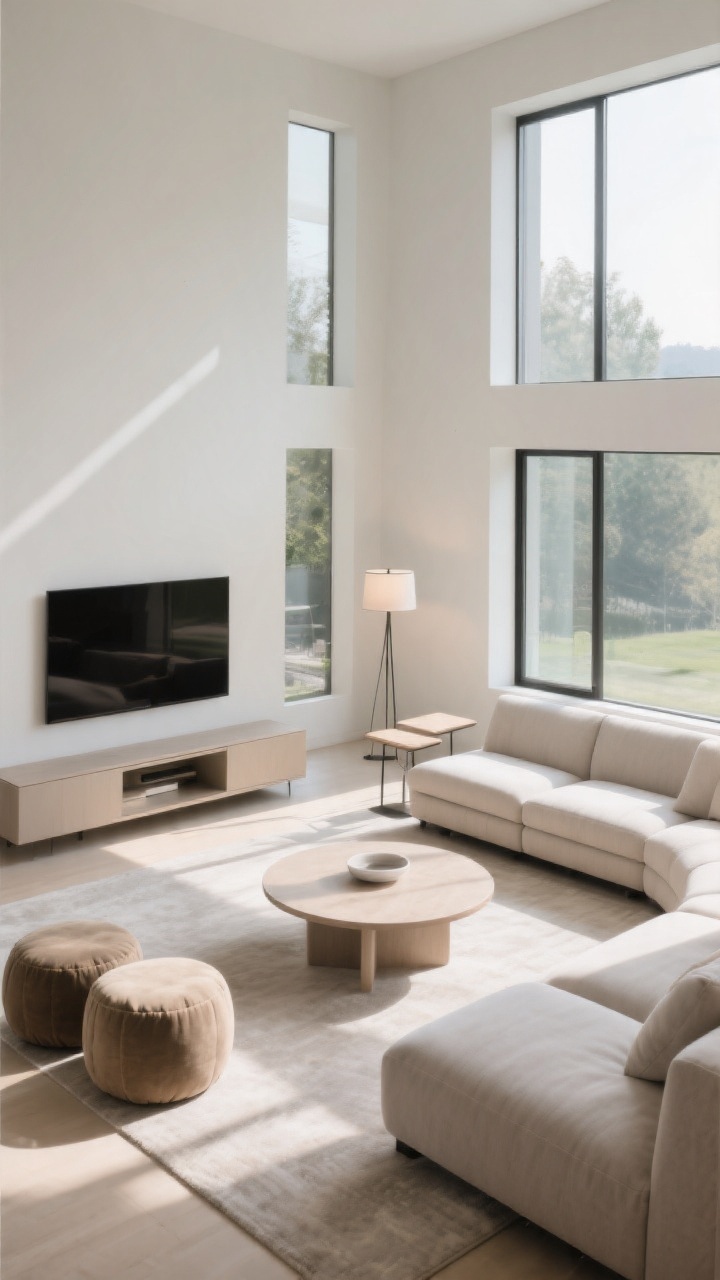
Got a sectional? Treat it like a wall you can sit on. Sectionals define space beautifully—if you let them. The trick is balancing their visual heft with shapes and heights that keep things airy.
Sectional Game Plan
- Face the open side toward the room’s best feature: windows, fireplace, or entry sightline.
- Pair with a round or oval coffee table to break up all those right angles.
- Use a low-profile media unit or credenza so the sectional stays the star.
Layout Enhancers
- Place a floor lamp in the sectional’s corner or tuck a slim table there for balance.
- Add a bench or poufs opposite the open side for extra perches during movie nights.
- If the chaise blocks flow, flip the orientation or swap for an ottoman chaise.
IMO, a modular sectional with moveable pieces is the ultimate cheat code. Rearrange on a whim; no sweat.
6. Layer Lighting To Flatter The Big Sofa
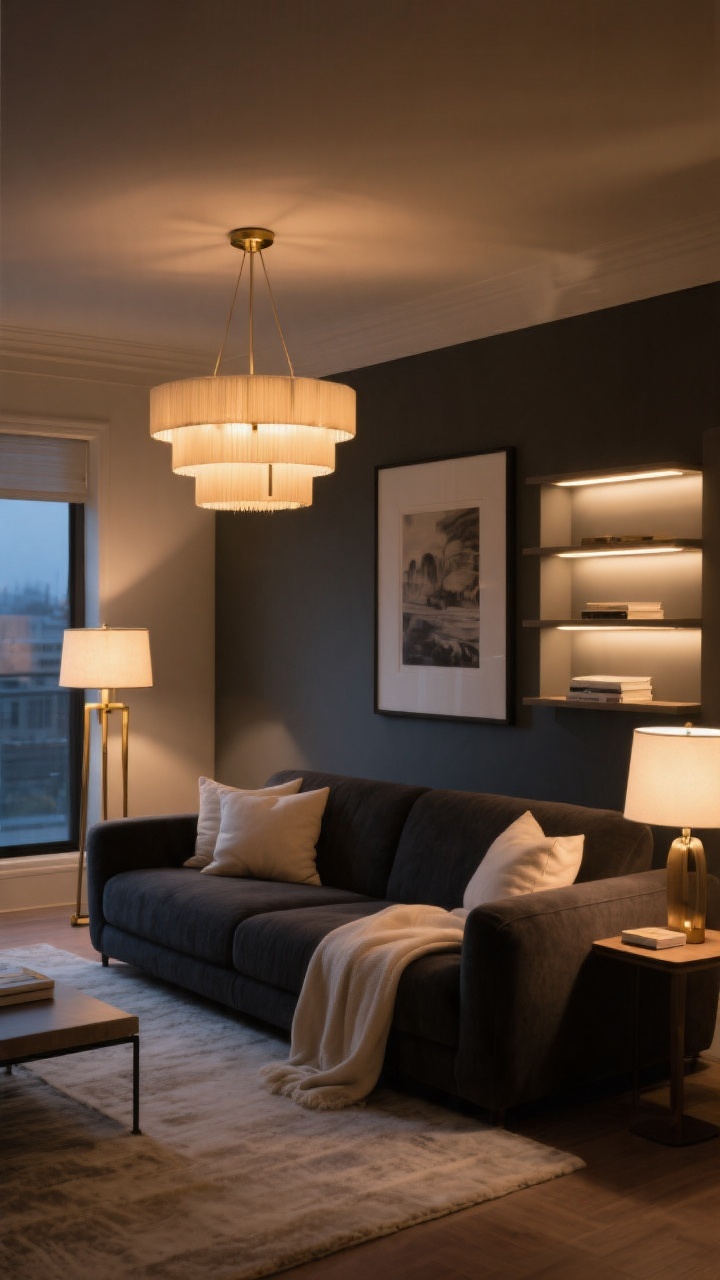
Lighting changes everything—especially with oversized seating that can cast shadows. You want a three-layer setup: ambient, task, and accent. No interrogation-room ceilings allowed.
Your Lighting Checklist
- Ambient: A flush mount or chandelier on a dimmer to set the mood.
- Task: Floor or table lamps near reading spots (aim for 60–75 watts equivalent).
- Accent: Picture lights, sconces, or LED strips in shelves for depth and drama.
Placement Tips
- Use two light sources on opposite sides of the sofa to prevent dark corners.
- Match color temperature (2700K–3000K) for a cozy, cohesive glow.
- If your couch is dark, add light textiles—pillows, throws, or a pale rug—to bounce brightness.
Bonus: A dimmer switch is the easiest “renovation” you’ll ever do. Romance, Netflix, board games—done.
7. Scale Rugs, Art, And Storage To Match The Sofa
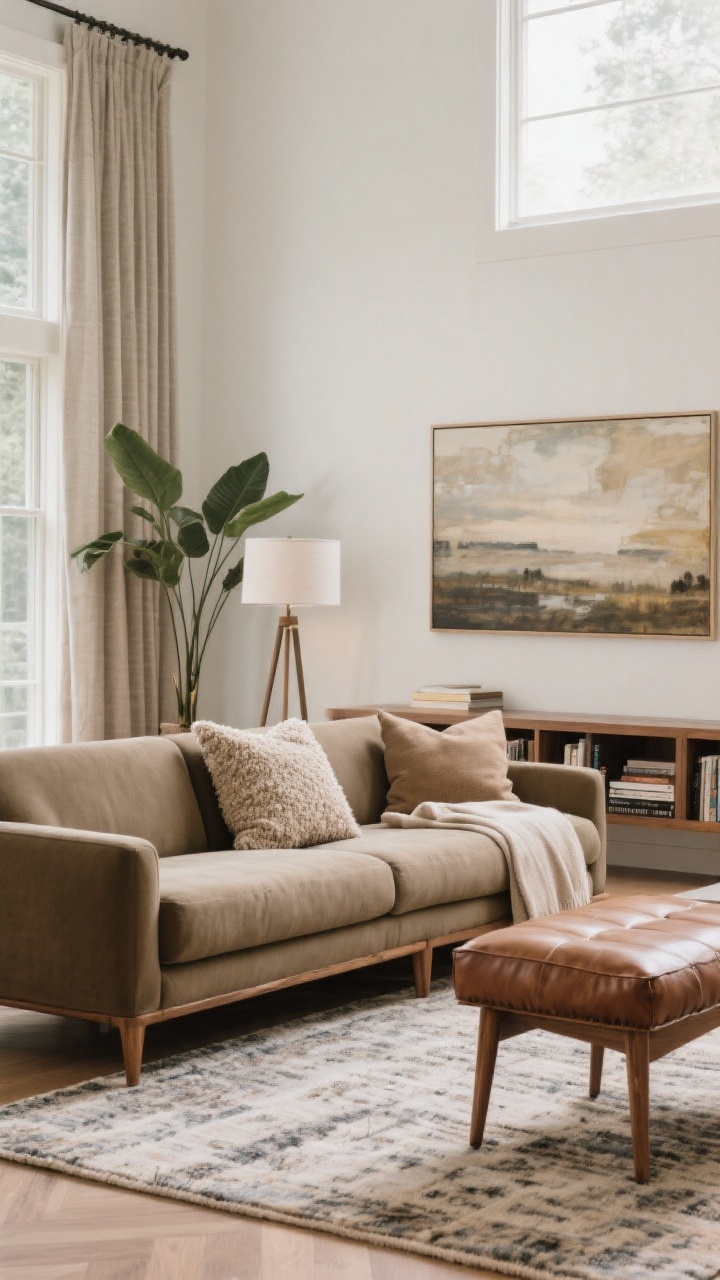
When your couch goes big, everything else needs to level up. Tiny art and skimpy rugs make large furniture look awkward. Think proportional scaling from floor to wall.
Make It Look Intentional
- Rug size: Front legs of all main seating on the rug, or go wall-to-wall with a large flatweave.
- Art size: If hanging above the sofa, aim for 2/3 the width of the couch or a gallery wall that spans it.
- Storage: A long console or low bookcases balance the sofa’s visual weight and add function.
Style Balancing Acts
- Use vertical elements (tall plants, floor lamps, drapery) to pull the eye upward.
- Mix textures—bouclé, linen, leather, wood—so the sofa doesn’t feel like one big block.
- Repeat a color or material from the couch in two other places for harmony.
FYI: Hanging curtain rods 4–6 inches above the window trim makes ceilings look taller and the sofa feel less bulky. Magic.
Wrap-Up: A large couch is not a space hog—it’s a power move. Anchor it, float it, zone it, and scale everything else to match. With the right layout, your living room will feel intentional, comfy, and wildly stylish. Now go fluff those pillows and own the room.